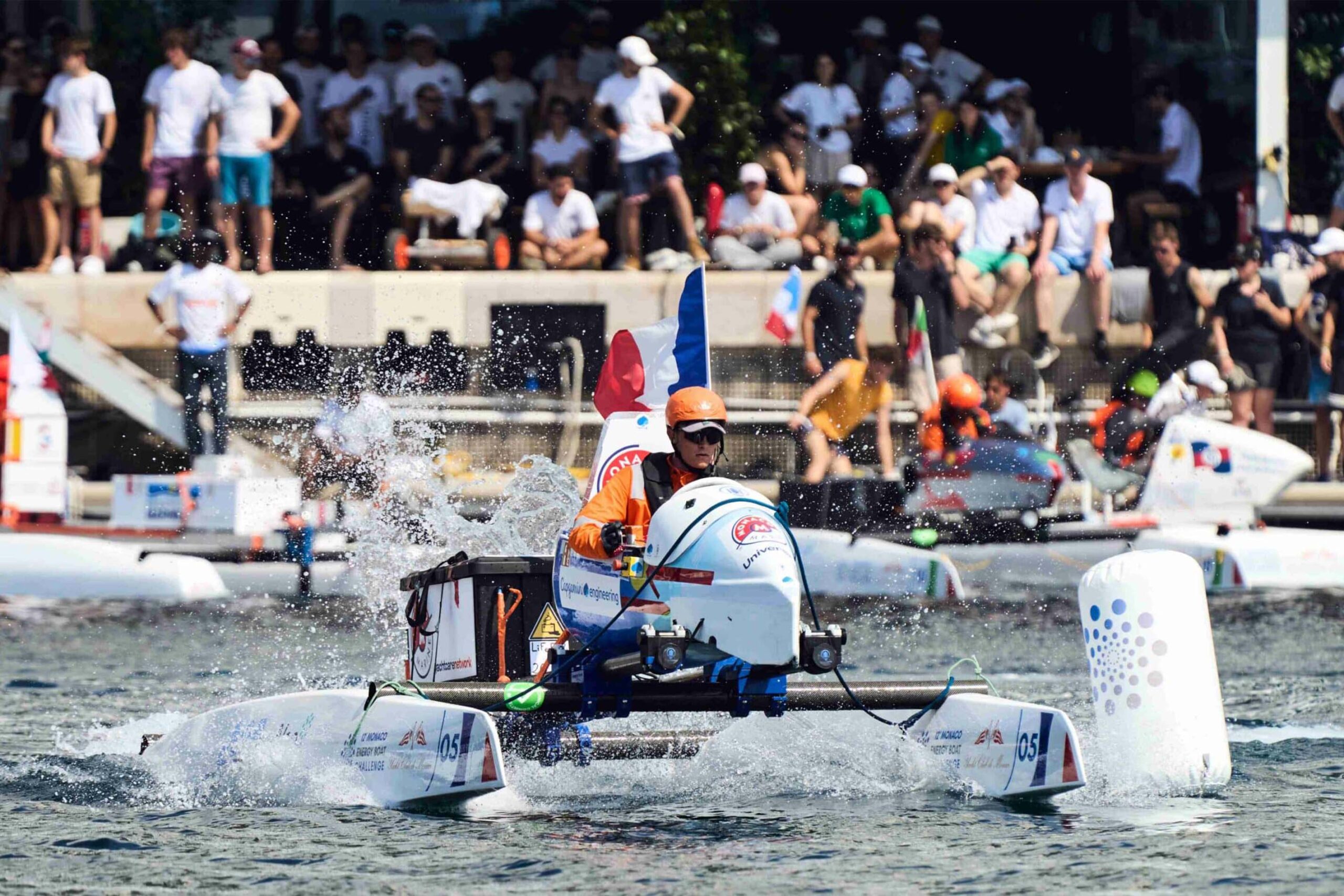
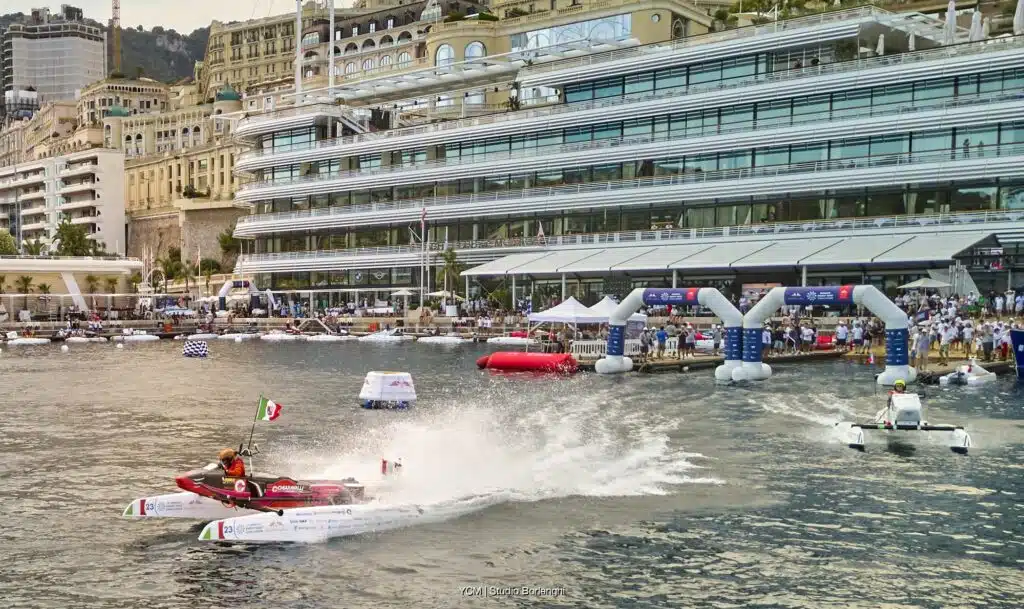
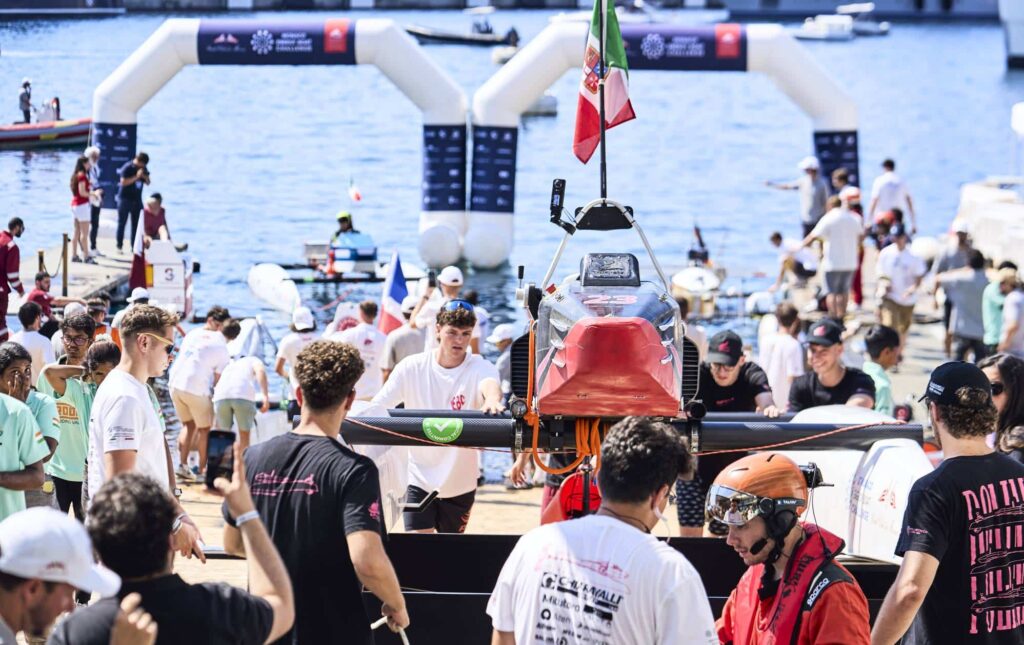
The global shipping and pleasure boating sectors are under intense pressure to accelerate the clean energy transition. From July 8 to 11, 2026, the Yacht Club de Monaco will host the 13th Monaco Energy Boat Challenge, an event structured as an active outdoor laboratory for sustainable propulsion technologies. Supported by the Prince Albert II of Monaco Foundation, UBS, BMW, and SBM Offshore, the 2026 edition gathers 43 teams representing 21 nationalities across Europe, North America, the Middle East, and Africa. This assembly establishes a unique environment where hundreds of young engineers, universities, and industry professionals test mature prototypes in real-world sea conditions.
The AI Class: Autonomous Systems and Neural Networks
Artificial intelligence is no longer a theoretical concept on the water; it is a primary navigation aid. The AI Class features 11 teams focused entirely on full hull autonomy, combining advanced sensors, complex algorithms, and onboard decision-making systems to optimize energy management and piloting. Poland’s AGH Solar Boat team relies on onboard computers running neural networks to map environments, detect obstacles, and plot trajectories in real time. Concurrently, Belgium’s UGent Sailing stands out with an advanced autonomous control system, turning the Mediterranean into a testing ground for cutting-edge machine learning.
The Energy Class: Standardized Hull Optimization
Direct comparison between competing propulsion systems requires a level playing field. The Energy Class features 26 teams utilizing an identical, standardized hull supplied directly by the Yacht Club de Monaco. Because the hulls are matching, the focus narrows strictly to how internal architectures, hybrid systems, and electrical configurations are optimized. France’s HydroGadz is actively refining counter-rotating propellers to boost propulsion efficiency and minimize hydrodynamic losses. Meanwhile, the Canadian entry from Exocet Polytechnique Montréal, working alongside the Hydrogen Research Institute, brings an updated, highly secure hydrogen system to the baseline hull.
Image from Monaco Energy Boat Challenge
The Energy Class and Environmental Integration
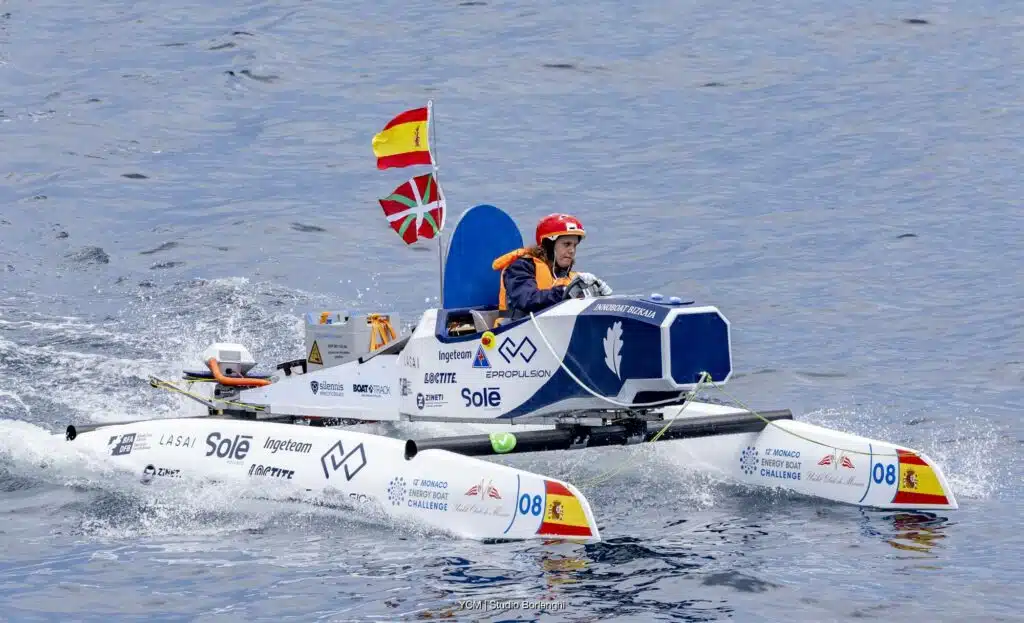
Further advancing the Energy Class is the Spanish entrant InnoBoat Bizkaia, which successfully fuses machine learning with live environmental data. The team’s route planning system pulls real-time tracking from Copernicus Marine, allowing the onboard computer to dynamically adjust trajectories based on prevailing sea currents. Additionally, an AI-powered conversational assistant guides the pilot through instantaneous energy and operational decisions during the race. This architecture proves that software refinement is just as critical to range optimization as raw battery capacity.
The SeaLab Class: Advanced Transition Fuels
Alternative energy frameworks that sit outside mainstream electric and hydrogen paths require dedicated space for rigorous experimentation. The SeaLab Class accommodates six teams operating as true floating laboratories, testing emerging energy architectures that remain relatively uncommon in the broader maritime sector. A notable example is the prototype fielded by Solar Boat Twente from the Netherlands, which utilizes a methanol-powered propulsion system. The objective here is to evaluate the viability of transition fuels, unlocking entirely new avenues of reflection for the full decarbonization of international transport.
The Open Sea Class: Commercial Fleet Commercialization
While students and technical colleges refine prototypes, the industry requires fully operational models ready for immediate deployment. The Open Sea Class serves as the premier showcase for CE-certified, zero-emission vessels that are commercialized and ready for production. With registrations open until mid-May, this class provides established international brands with a prime opportunity to demonstrate corporate excellence. It allows both the public and prospective buyers to observe firsthand how the next generation of luxury day-boats and tenders will perform on the water.