Yachting is inextricably linked to the health of the world’s oceans, which are currently facing severe threats from climate change, habitat destruction, and plastic leakage. Every year, eight million tonnes of plastic leak into the ocean, contributing to massive accumulation zones like the Great Pacific Garbage Patch, which now covers 1.6 million square kilometres. To combat this, the marine industry is rapidly incorporating sustainability initiatives across all operational levels. For superyacht crews, minimizing environmental impact often begins directly in the galley, where heavy, single-use packaging generates excessive waste and occupies critical storage volume during extended offshore itineraries.
The Problem with the Chilled Supply Chain
Stocking a yacht with traditional provisions creates significant logistical and environmental friction. Standard liquid milk cartons are heavy, rigid, and heavily reliant on an energy-intensive chilled supply chain that produces a massive ecological footprint. The continuous refrigeration required from the factory to the marina, and finally to the yacht’s onboard coolers, consumes unnecessary power. To mitigate this, MilkadamiaCEO Jim Richards advocates for “pre-cycling”—the practice of purchasing shelf-stable products to bypass the chilled supply chain entirely, drastically reducing the energy required to provision a vessel.
The Mechanics of Oat Milk Slices
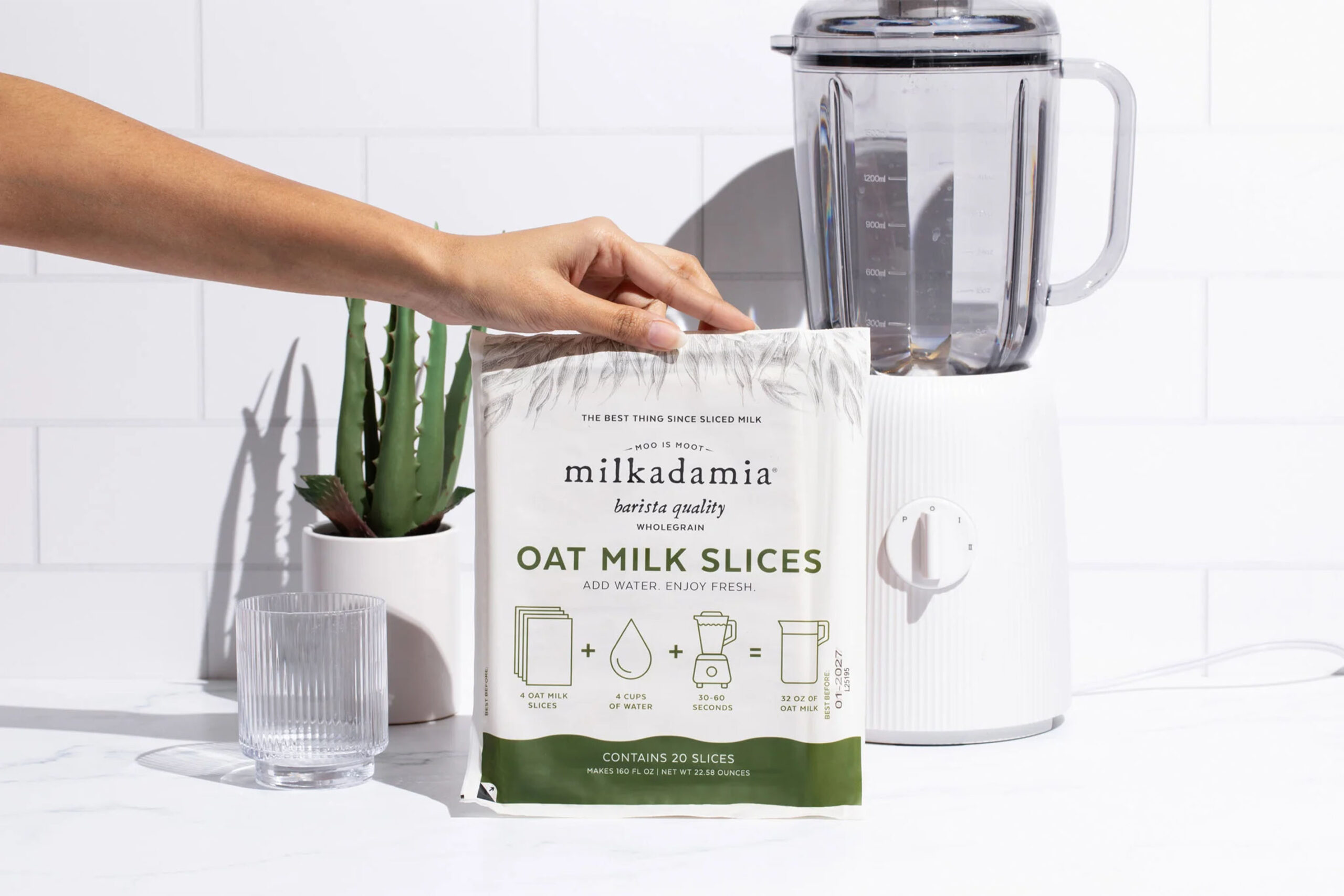
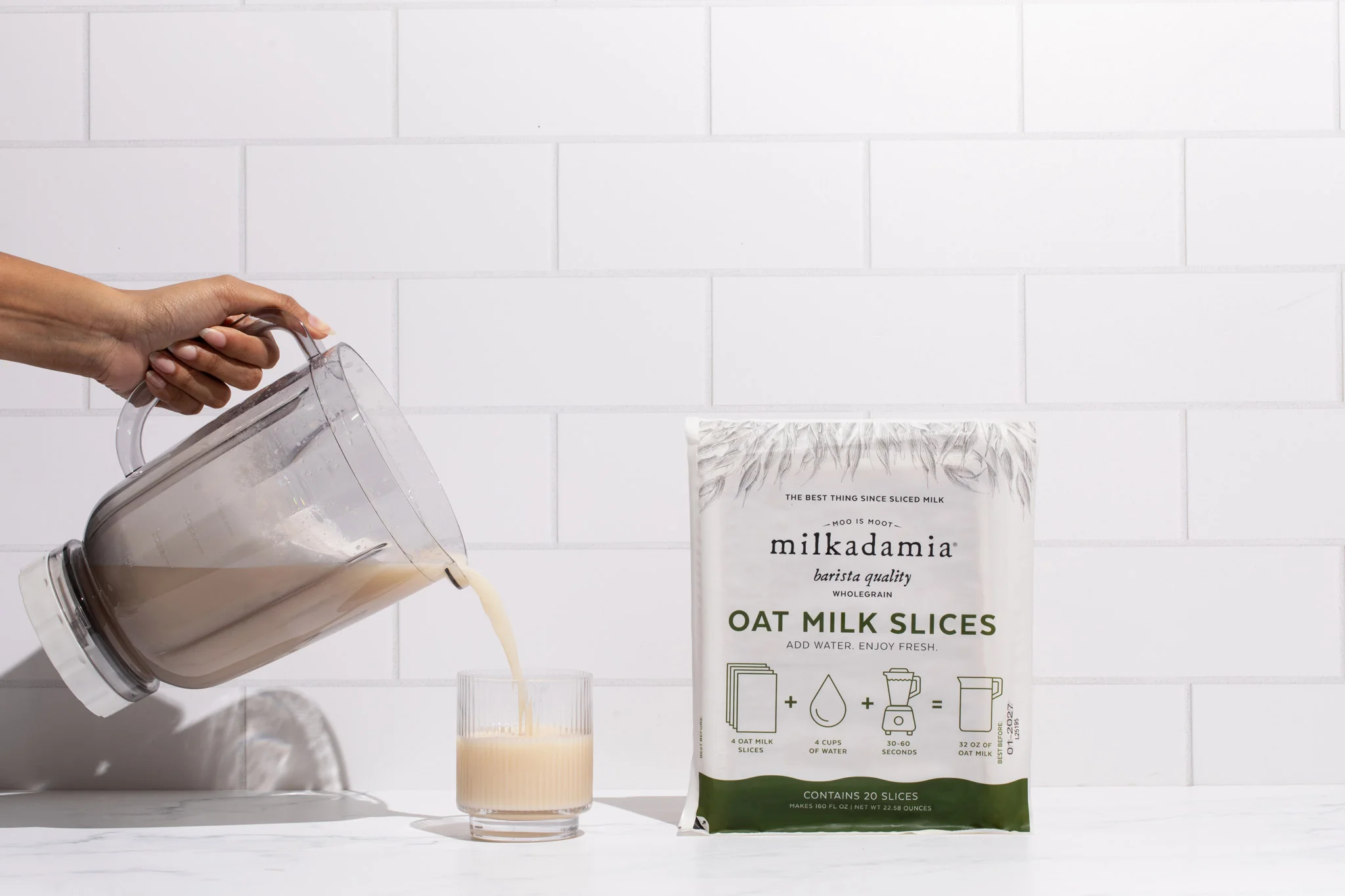
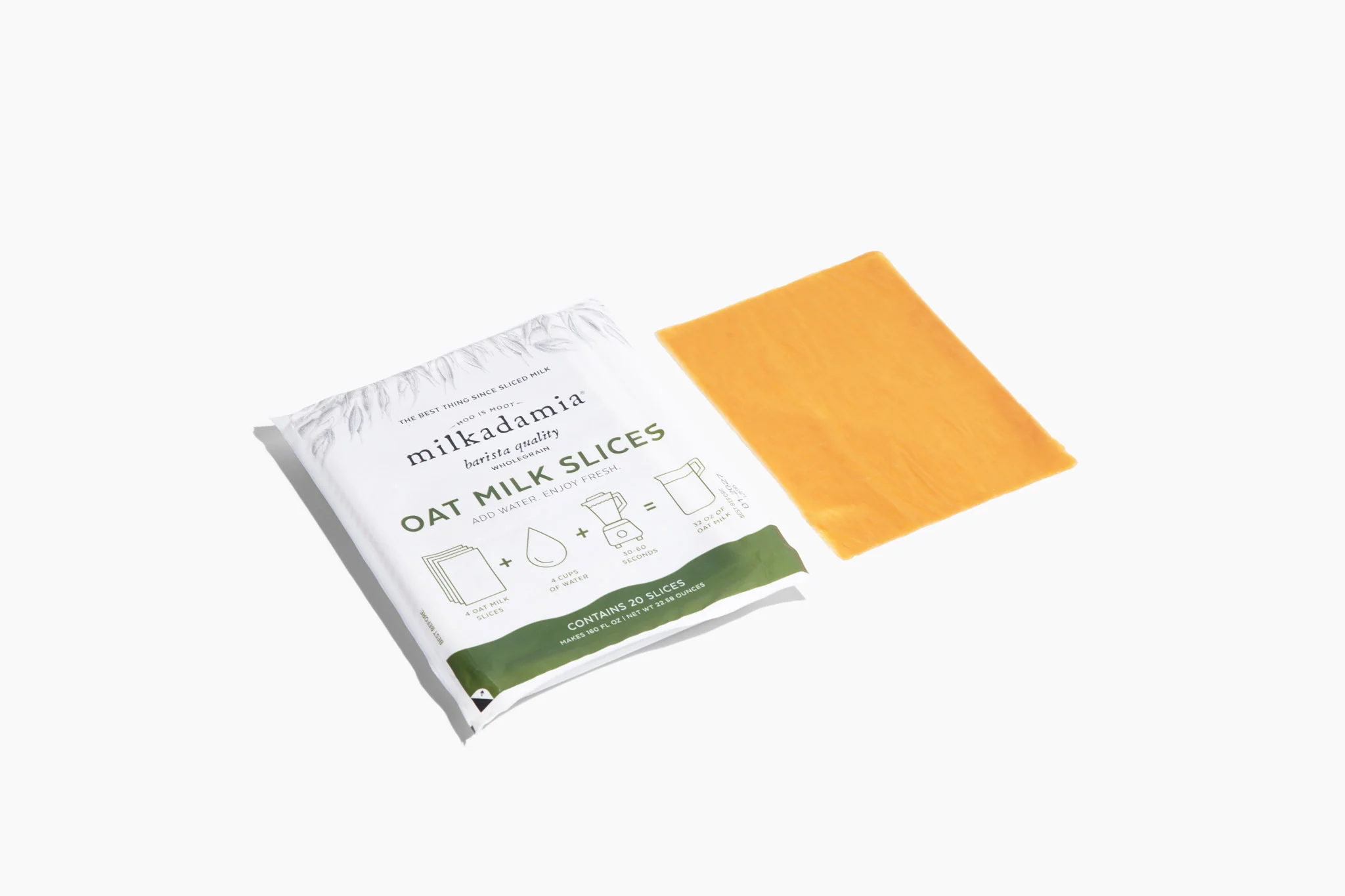
Milkadamiahas engineered a radical alternative to bulky beverage packaging specifically designed to flatline landfill contributions. The company’s new Oat Milk Slices utilize a proprietary process to print oat milk base into physical, flat-packed sheets. Each packet contains 20 individual slices, with a single slice producing eight fluid ounces of fresh oat milk. To prepare the beverage, crew members simply remove the required slices and either blend them with water for 60 seconds or allow them to soak for 30 minutes before shaking. This modular format allows the crew to adjust the slice-to-water ratio to control the exact thickness of the milk.
Image from Milkadamia
Solving the Storage Equation
For yachts operating on long-range passages, cubic storage space is just as valuable as fuel capacity. Because the Oat Milk Slices remove the water content prior to shipping, this precycled product utilizes 85% less packaging and reduces shipping weight by 85% when compared to traditional liquid plant milk cartons. A single flat pack generates 160 ounces of milk without taking up space in the primary refrigeration units. This allows the chief stewardess to store massive quantities of barista-quality milk in dry lockers, freeing up the cold storage for highly perishable luxury provisions.
Supporting Regenerative Agriculture
The shift toward precycled, flat-packed provisions aligns with a broader industry push toward sustainable, plant-based consumption. Milkadamiaoperates from its roots as a small, family-owned macadamia farming business dedicated to healthy soil and regenerative agriculture. By utilizing raw, unroasted nuts and eliminating artificial additives, the brand supports farming practices designed to heal agricultural land and avert the clearing of tropical forests. Integrating these zero-waste slices into a yacht’s supply chain allows owners and charter guests to maintain premium culinary standards while actively participating in the reduction of global marine pollution.