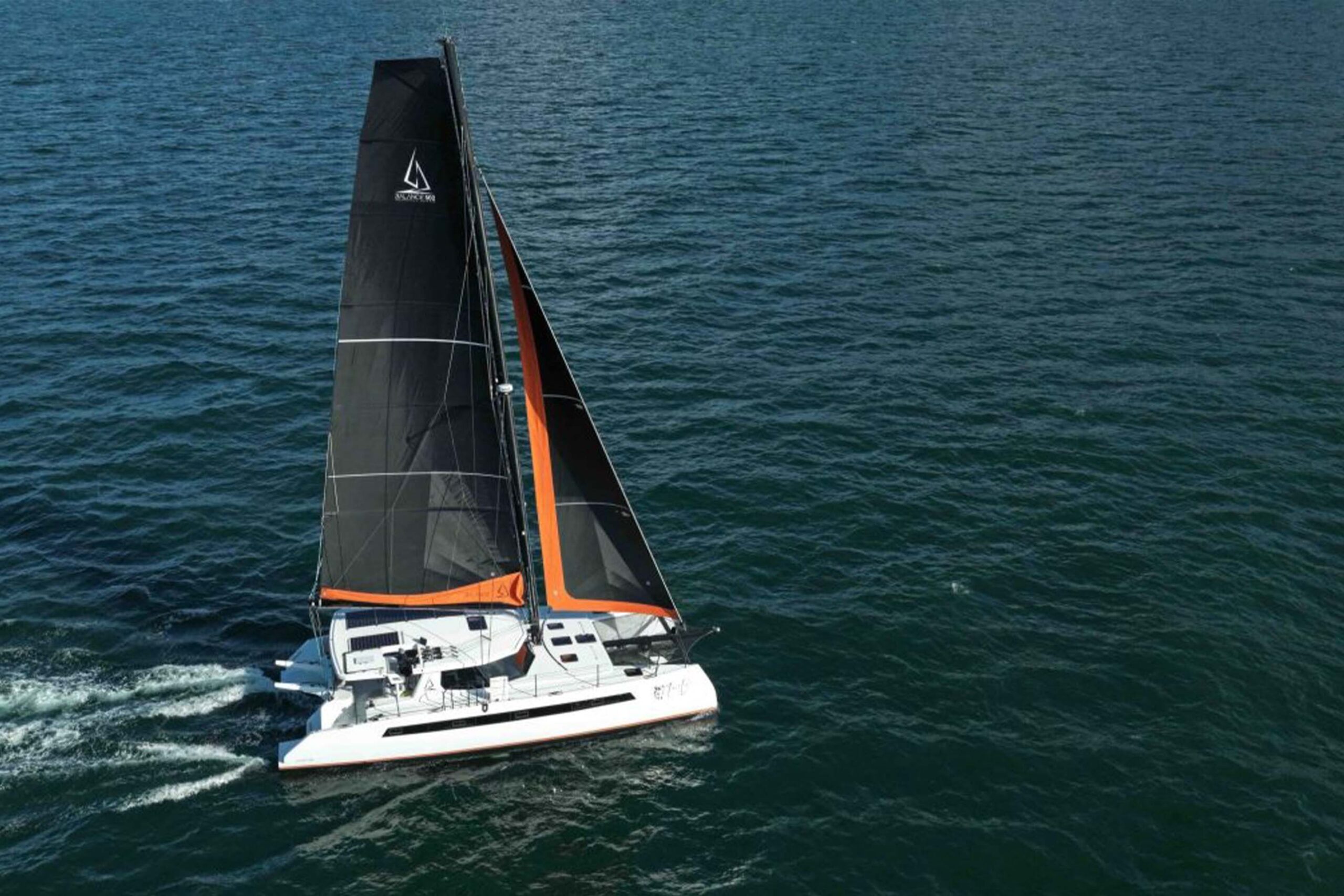
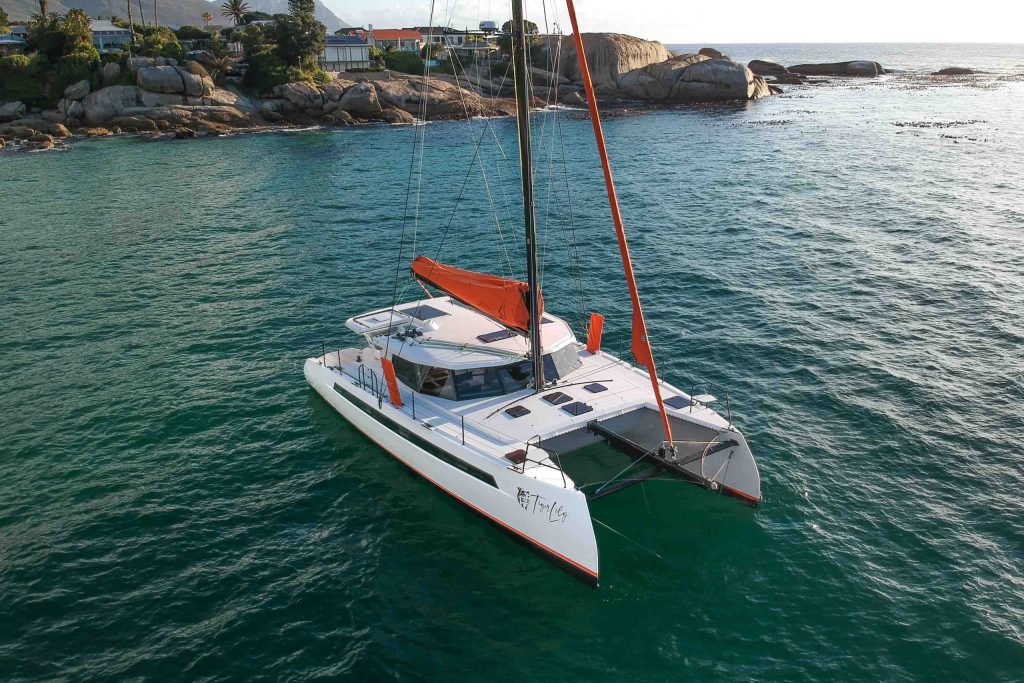
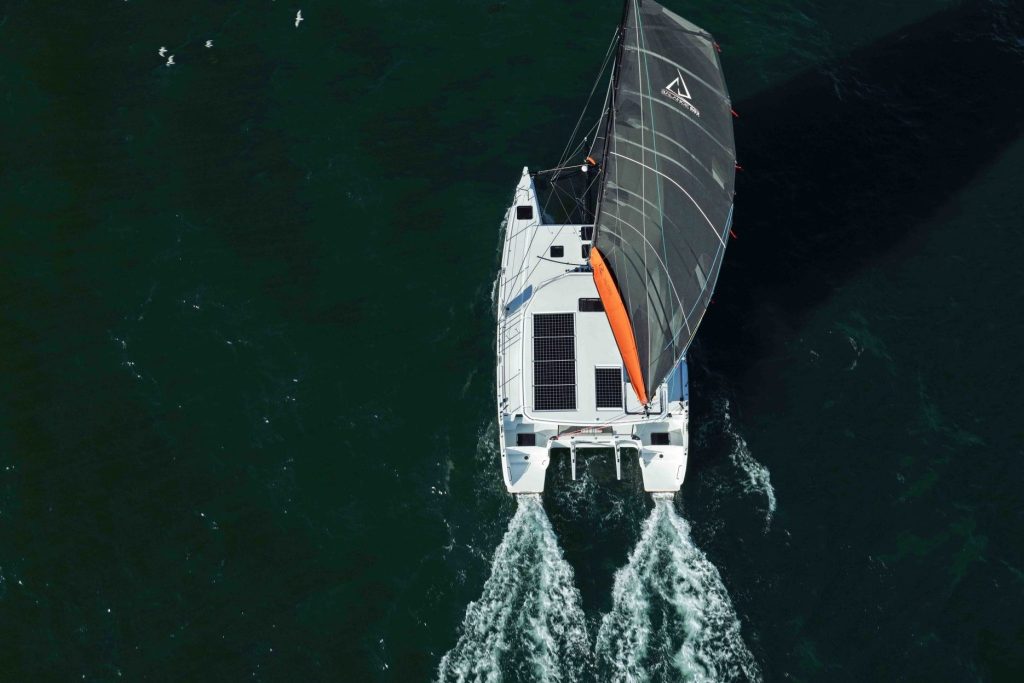
Every time Balance Catamarans completes a build, they weigh the vessel. This is not a ceremonial process; it is a strict commitment to operational accountability. With the launch of Twin Fin, their latest 502model featuring a full carbon core build, the numbers confirmed a major engineering milestone. The carbon core saved exactly over one ton—more than 2,200 pounds—when compared to their previous E-glass internal construction methods. This mass reduction fundamentally alters what a catamaran can accomplish on the water.
Structural Material Swaps
On previous models like the 442 and 482, the bulkheads, partition panels, cabin soles, and fluid tanks were constructed from E-glass. While proven, the material remains inherently heavy. In the new 502, the entire interior core structure is crafted exclusively from carbon fiber. Furthermore, the manufacturer transitioned the entire hull construction to a full vinyl ester resin system. Because vinyl ester is stronger, it allows for lighter laminate schedules across the board, resulting in a hull that is genuinely stiffer and lighter simultaneously.
Prioritizing Rigidity over Weight
While stripping a ton of mass is a significant achievement, weight saving was not the primary engineering goal. The carbon core was integrated first and foremost to increase structural rigidity. A stiffer boat accelerates faster, points higher, operates quietly, and maintains durability over the long term. The weight reduction is simply the consequence of utilizing the correct materials. However, the saved ton directly increases the load-carrying capacity, allowing owners to pack heavier bluewater gear like anchors and provisions without compromising draft.
Image from Balance Catamarans
Maintaining Bluewater Comfort
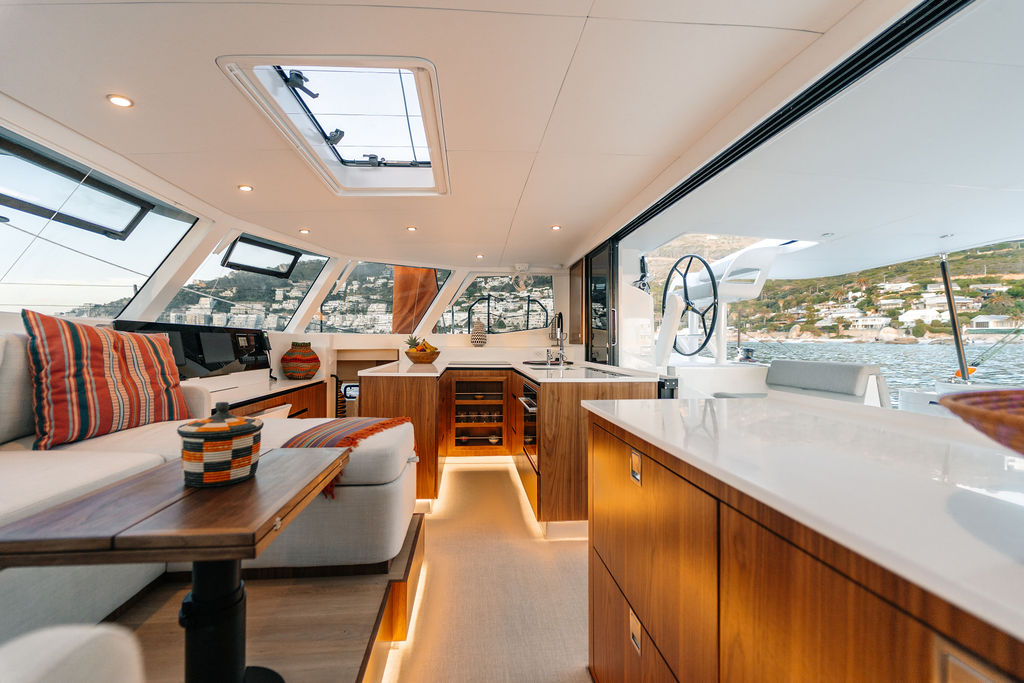
A performance hull does not require a stripped-out, spartan interior. Balance Catamarans recognizes that their customers sail offshore and require functional amenities like refrigeration and air conditioning. The carbon core build works directly with their furniture philosophy. The cabinetry remains fully custom, utilizing foam-core construction. By combining lightweight joinery with the rigid carbon substructure, the builder refuses to remove the essential hardware a bluewater sailor actually needs.
The 502 Propulsion Architecture
Beyond the hull, the 502offers advanced propulsion systems to match its structural efficiency. The vessel can be equipped with the Integrel VersaDrive Hybrid, which reduces fossil fuel consumption by up to 25% while rapidly charging a massive 36kw, 48-volt lithium battery bank. This eliminates the need for a third diesel engine and allows for a propane-free vessel. With Twin Fin currently entering sea trials, the market will soon see exactly how this carbon core performs under full sail.