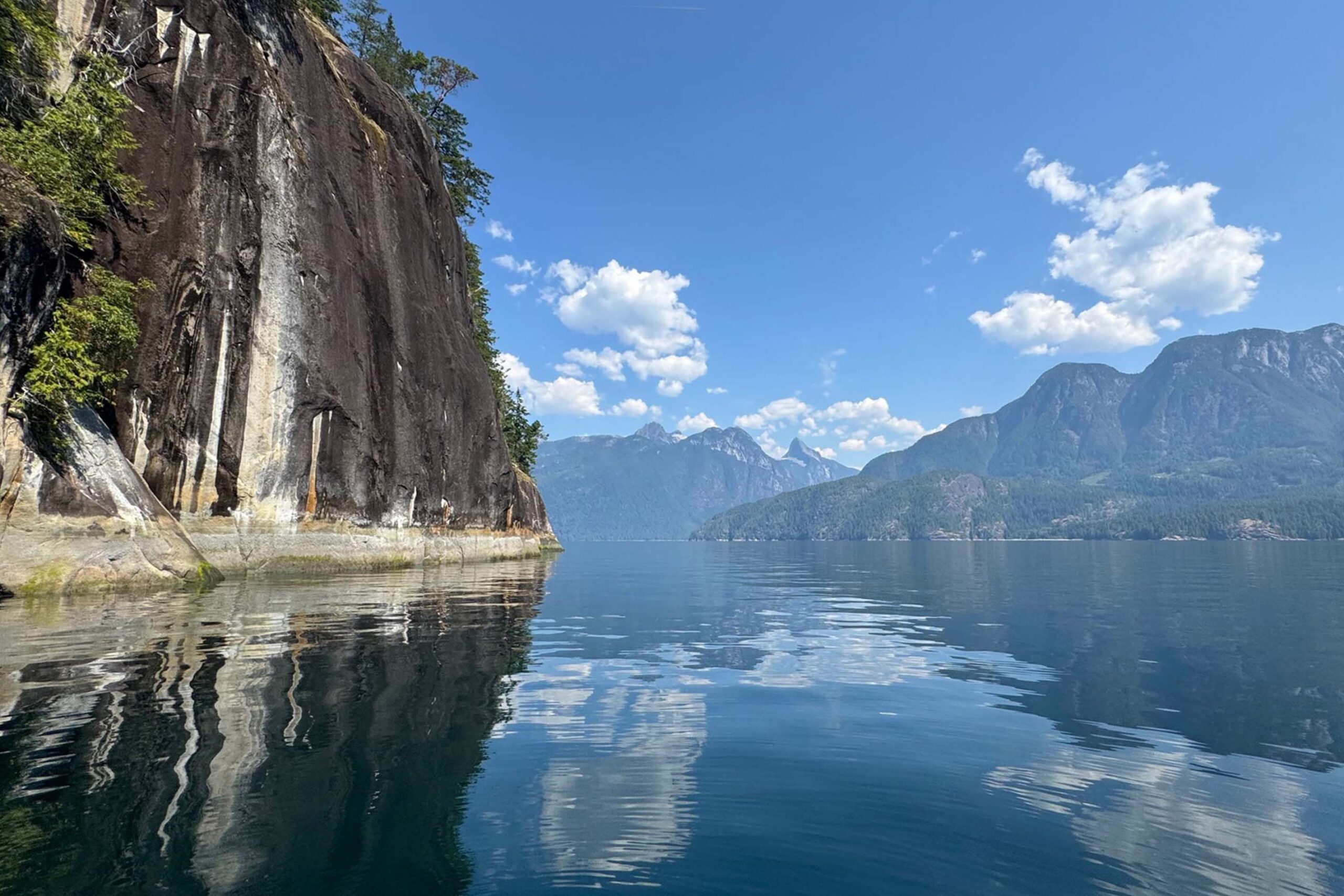
In 1792, Captain George Vancouver famously noted there was “not a single prospect pleasing to the eye” in these waters. History has proven him wrong. Today, Desolation Sound Marine Provincial Park is a majestic 8,500-hectare testament to the raw, untamed beauty of British Columbia. It is the largest marine park in the province, a sprawling labyrinth of cedar-covered mountains and deep waterways that offer a brand of isolation you simply cannot find elsewhere. For those willing to head north from the standard Seattle routes, the “Desolation” label is merely a filter to keep the crowds away from this spectacular sanctuary.
A Geographical Masterclass
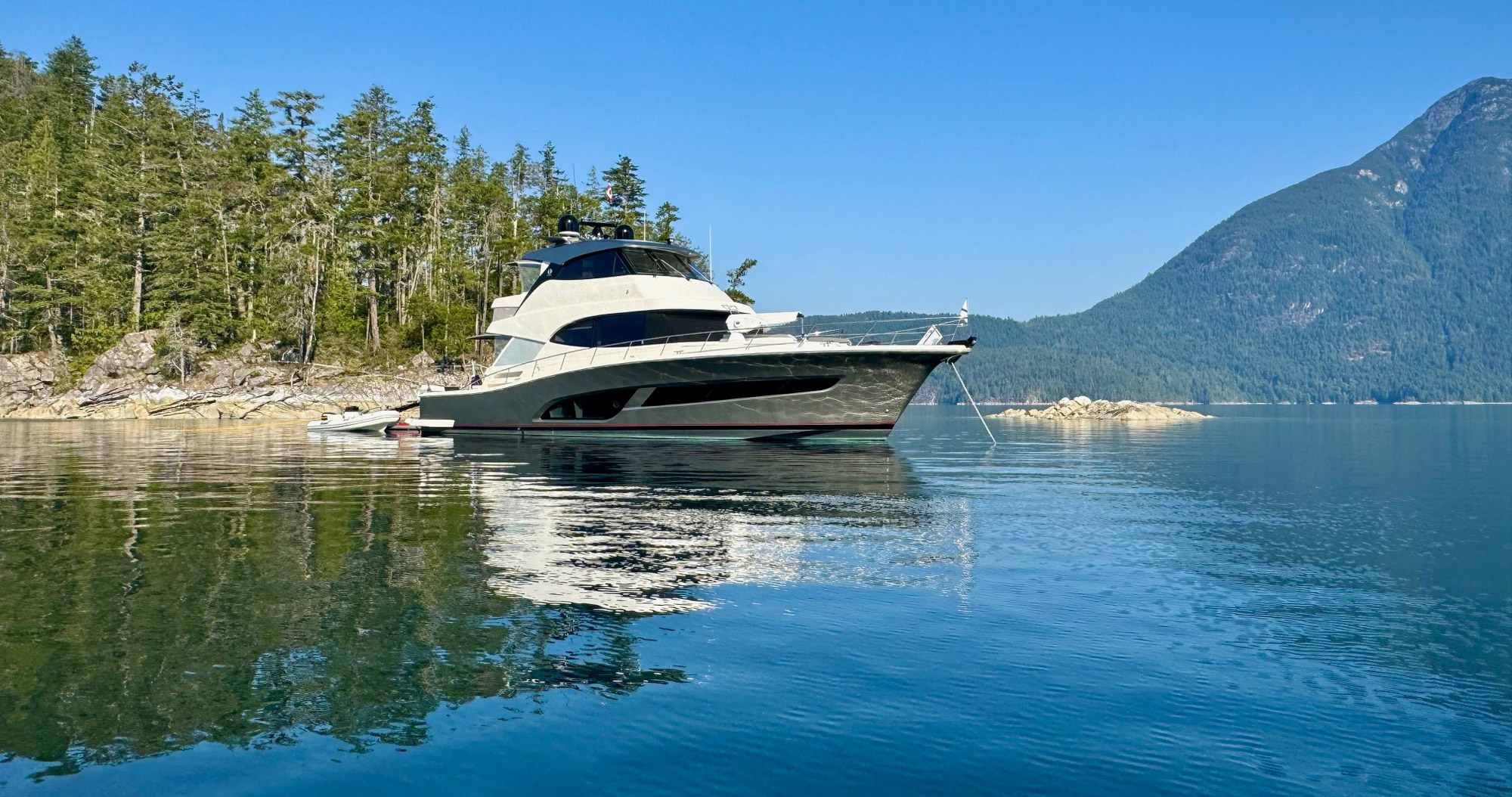
The draw of the Sound lies in its dramatic verticality. The landscape shifts violently from rolling hills to sheer high cliffs and mountains cloaked in fir trees. Navigating these deep channels aboard a vessel like the Riviera64 Sports Motor Yacht provides an unmatched perspective on the scale of the Canadian North. It is a place where you can anchor beneath a 7,000-foot granite peak and feel the weight of the silence—a gritty, grounding experience that resets your internal clock.
The Warm-Water Paradox
The Sound’s greatest technical anomaly is its temperature. While the surrounding Pacific Northwest waters are notoriously bone-chilling, Desolation Sound features a unique tidal movement that allows the sun to bake the water to a staggering 73 degrees Fahrenheit (23 degrees Celsius). This creates a bizarre, tropical-temperature swimming paradise in the middle of a fjord landscape. It is 20 degrees warmer than the waters just a few hours south, making it a premier destination for kayaking, swimming, and “tender cocktail hours” in a setting that looks like the end of the world.
The Majesty of Princess Louisa Inlet
For the tactical explorer, the ultimate prize is Princess Louisa Inlet. Often described as a fjord within a fjord, this hidden gem is guarded by the Malibu Rapids, a narrow white-water barrier that requires perfect timing and precision to transit. Once inside, you are enveloped by a granite-walled gorge that rises sharply to 7,000 feet. At the head of the inlet lies Chatterbox Falls, a 120-foot cascade that empties into waters over 1,000 feet deep. It is a cathedral of nature that makes even a 64-foot “mini cruise ship” feel small.
The Outpost Life at Refuge Cove
Visiting Desolation Sound is a masterclass in off-grid refinement. At the heart of the wilderness is Refuge Cove, an isolated boardwalk general store located 45 miles from any other shop. There is no “order ahead” here; you adapt to the rhythms of the outpost, supplementing your galley with whatever fresh fruit the store has in stock and the prawns or crabs you pull from the Sound yourself. It is an authentic, rugged lifestyle where a cold beer at the cove feels more exclusive than a table at the finest Seattle restaurant.
The Wild Frontier
The Sound is a thriving theater of wildlife. Orcas and humpback whales frequently break the surface, while black bears and grizzly bears wander the shorelines in search of food. It is not uncommon to see cougars or wolves moving through the cedar forests while eagles circle above. For those seeking a destination that offers a raw connection to the earth without sacrificing the comfort of a high-performance yacht, Desolation Sound is the definitive North American frontier.