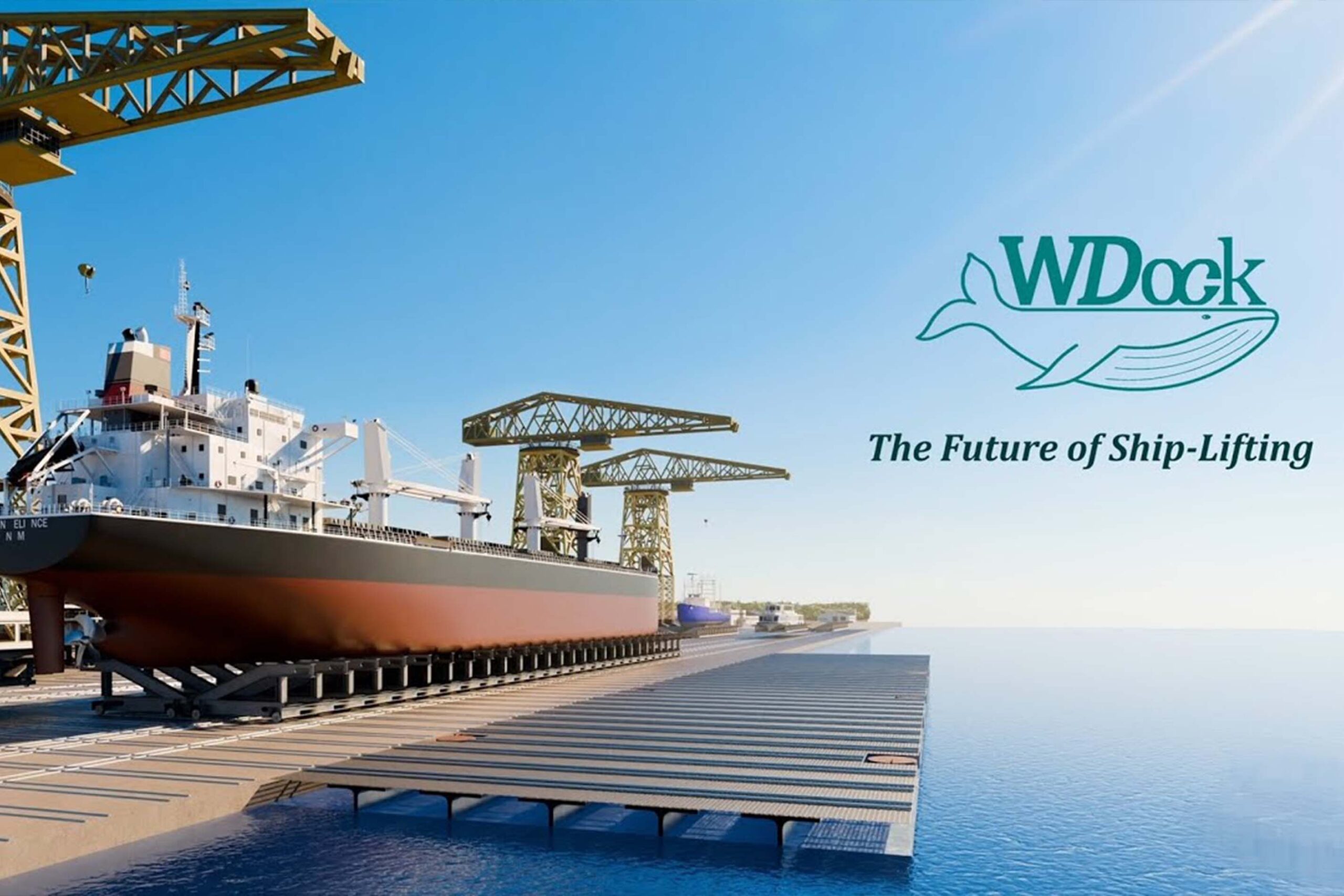
A severe mismatch exists between current commercial fleet sizes and available dry dock capacity. Current shipyards remain constrained by rigid infrastructure. Whale Dock answers the industry deficit with a scalable alternative. By providing a solution capable of handling unlimited tonnage, the system directly confronts the physical limitations restricting modern fleet maintenance.
The Archimedes Advantage
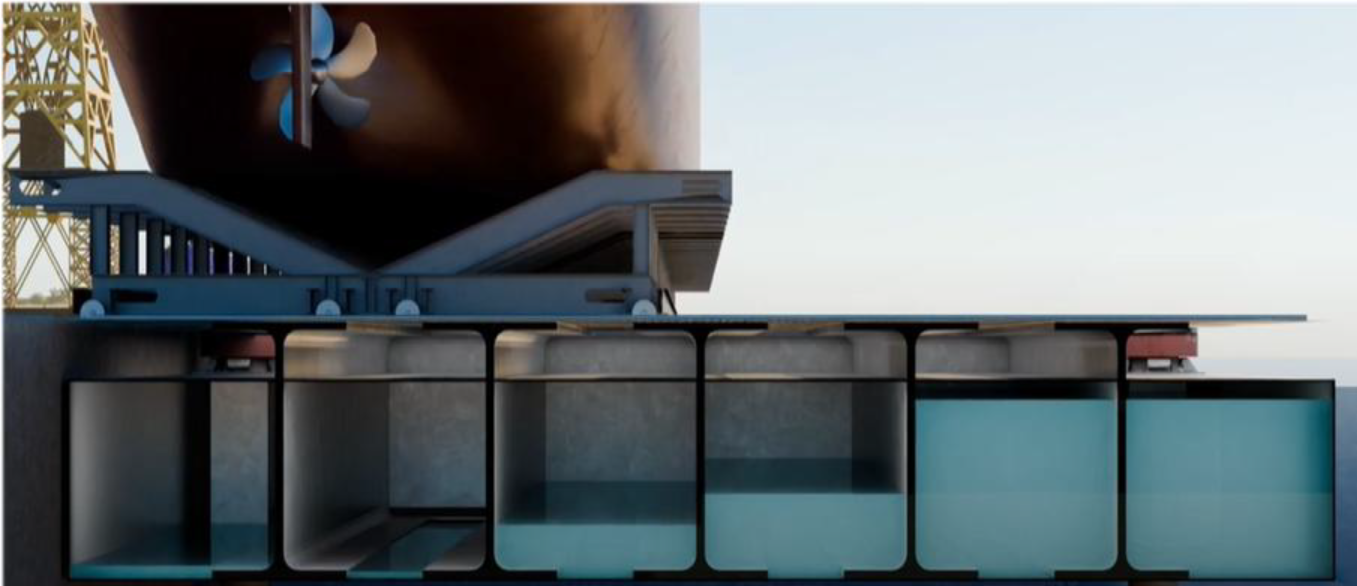
Operational mechanics rely on buoyancy rather than mechanical strain. The system lifts massive vessels through a network of compartmentalized tanks, pumps, and valves. By removing steel wire ropes entirely, the platform ensures maximum structural stability via an automated management system. Shipyards gain the ability to service multiple boats simultaneously, drastically reducing the amortization period.
Image from Whale Dock
Slashing Operational Expenditure
Financial margins dictate maritime viability. Implementing the buoyancy system yields a 40 percent reduction in capital expenditure. Operational costs drop by 50 percent, while maintenance expenses fall by 60 percent due to a simplified setup with fewer components. A standard 3,000LT operation yields €20M in total cost savings.
Environmental Compliance Overhaul
Sustainability operates as a strict regulatory requirement. Whale Dock achieves an 80 percent CO2 reduction compared to conventional Syncrolifts. The system protects the marine ecosystem by eliminating hazardous lubricants and non-reusable cables. The architecture aligns perfectly with EU Directives on emissions and leakages, ensuring compliance for international port operations.
Industrial Scale and Financial Backing
The corporate structure relies on licensing, design software, and post-installation support. Led by CEO Sergi Rivera Morcillo, the executive suite commands serious industrial intelligence, backed by CTO Joan Xavier Gràcia’s execution of dynamic simulations and COO Jaume Boldú Sardans’s management of international EPC projects. Secured by a €300k EU subsidy, a €200k ENISA loan, and an industrial partnership with a major Spanish shipyard, the financial runway remains firmly locked.