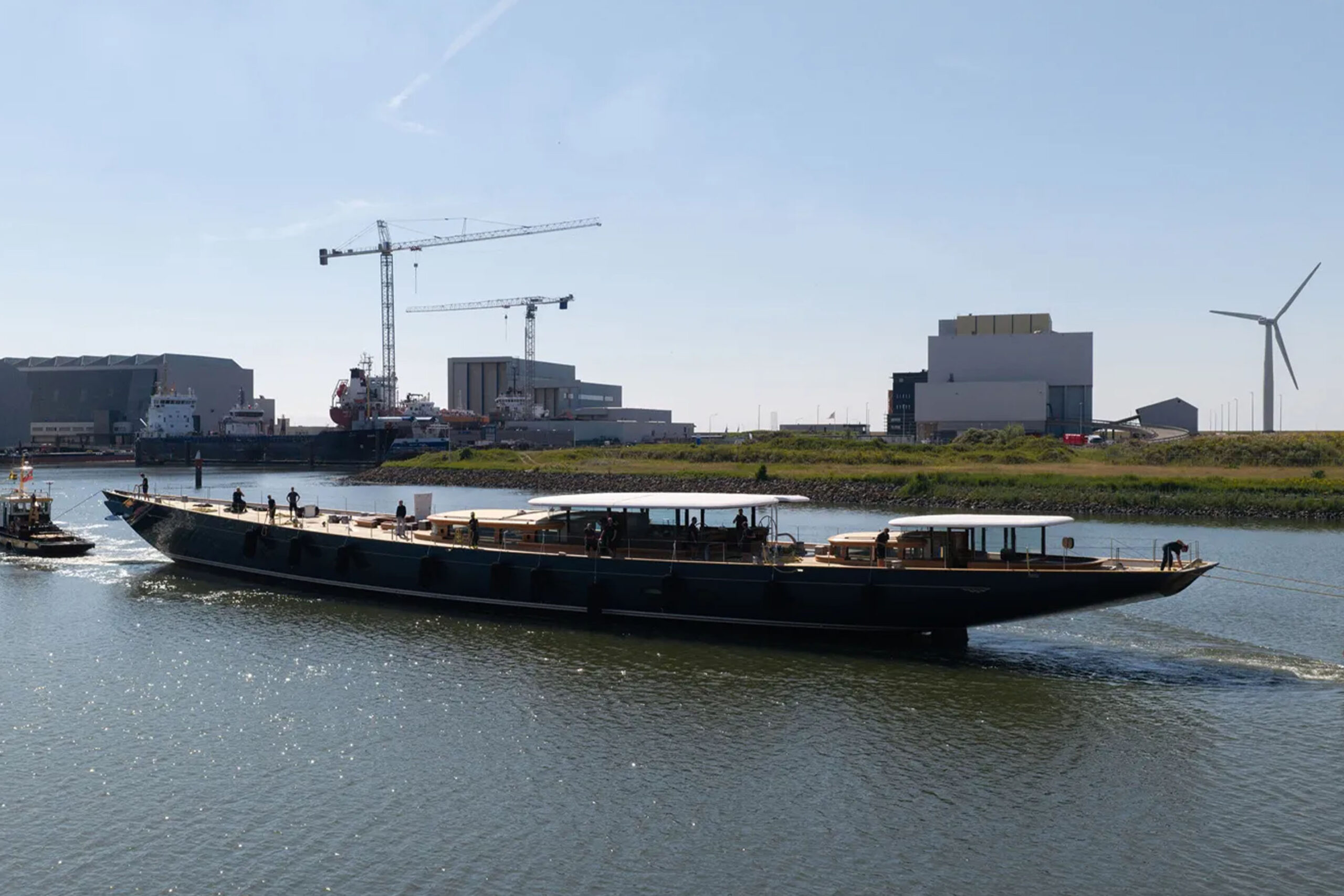
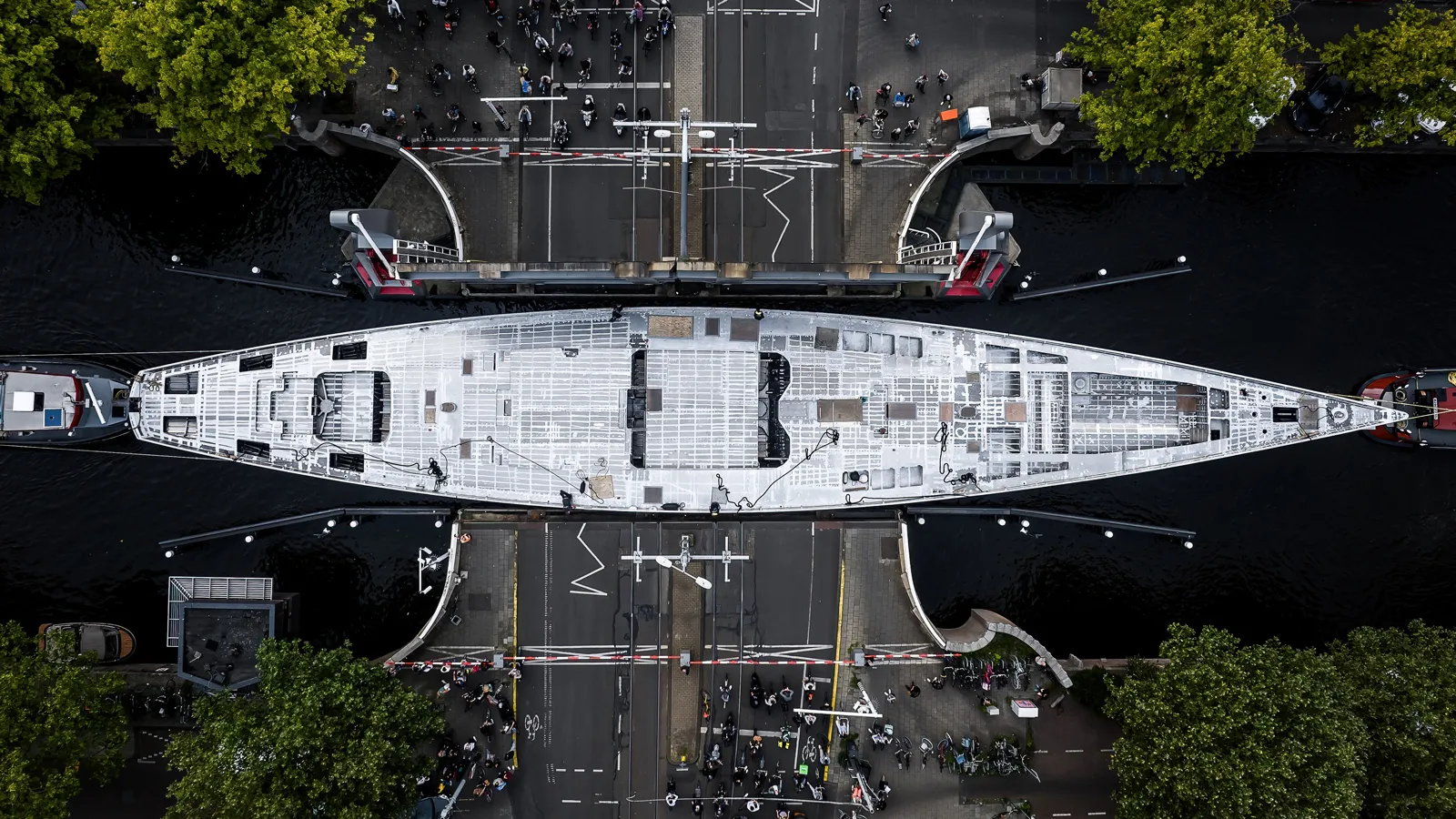
The yachting sector routinely discusses sustainability, but executing a massive zero-emission build requires profound financial and engineering commitments. Vitters Shipyard recently placed the 68.9-metre Zero into the water in Harlingen, Netherlands. Designed to operate entirely free of fossil fuels, this 494GT sailing yacht transitions from a theoretical design study into a physical maritime experiment. Following seven years of development by Vripack and Dykstra Naval Architects, the vessel will now commence extensive sea trials to validate her systems in real-world conditions.
Hydroelectric and Solar Integration
Sustaining a vessel of this scale without diesel generators involves stacking multiple regenerative technologies. Zero relies on turbine propellers to generate hydroelectric power while under sail. To supplement this input, the structural biminis integrate 100 square metres of photovoltaic thermal panels, producing both electricity and thermal energy for the onboard heating and cooling circuits. All harvested energy feeds directly into a centralized 700-volt DC grid, allowing the yacht to cruise comfortably for up to two weeks using only renewable sources.
America’s Cup Data Influences the Hull
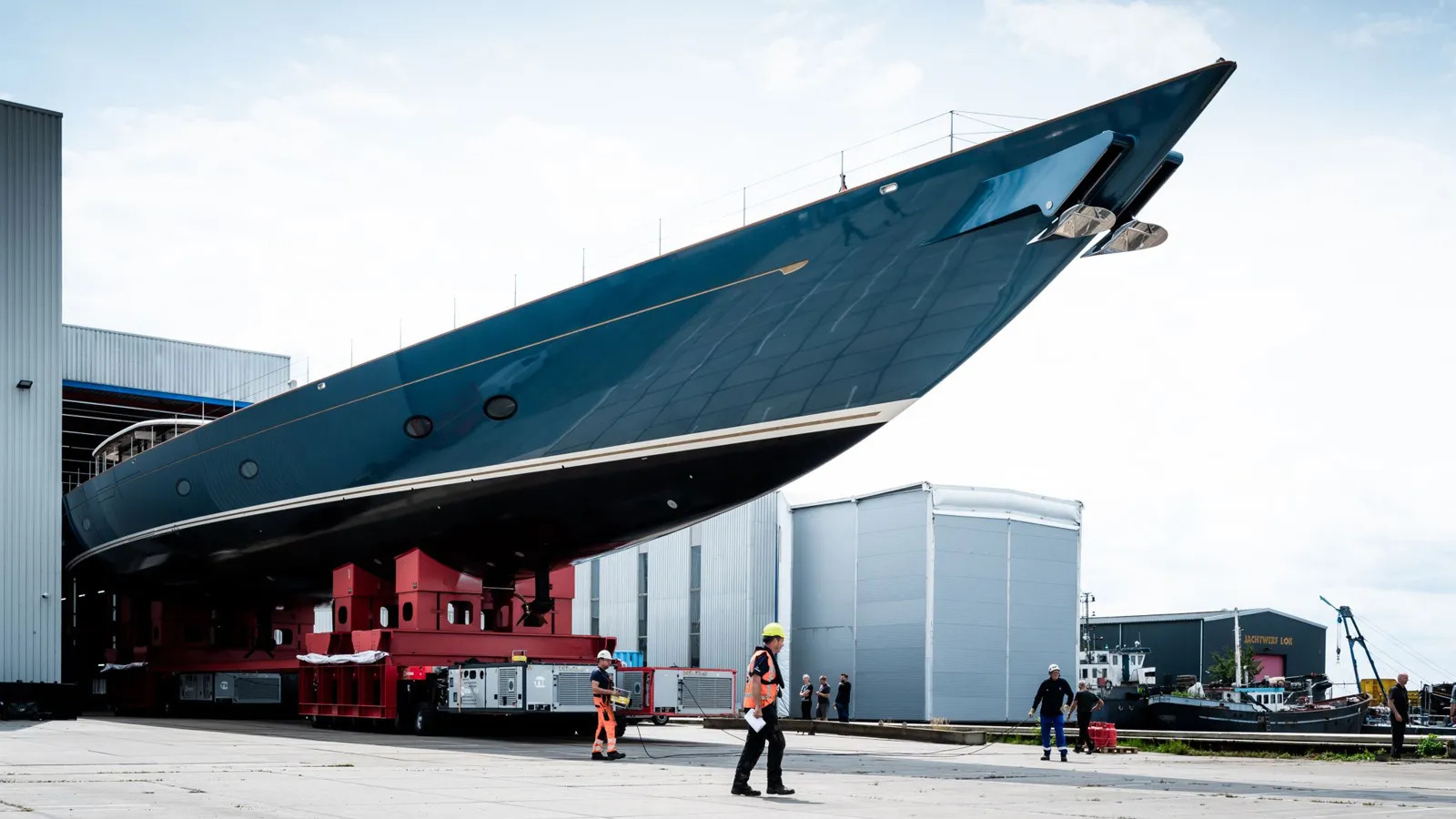
Heavy battery banks and green technology inevitably increase displacement, meaning the hull itself must compensate through extreme hydrodynamic efficiency. The design team collaborated directly with Emirates Team New Zealand to refine the topside curves for maximum performance. Tank testing indicates these specific structural modifications deliver a 2.5 percent speed increase, which subsequently yields an eight percent boost in overall electric power generation from the trailing turbines.
Image from Vripack
Rejecting Traditional Sailing Profiles
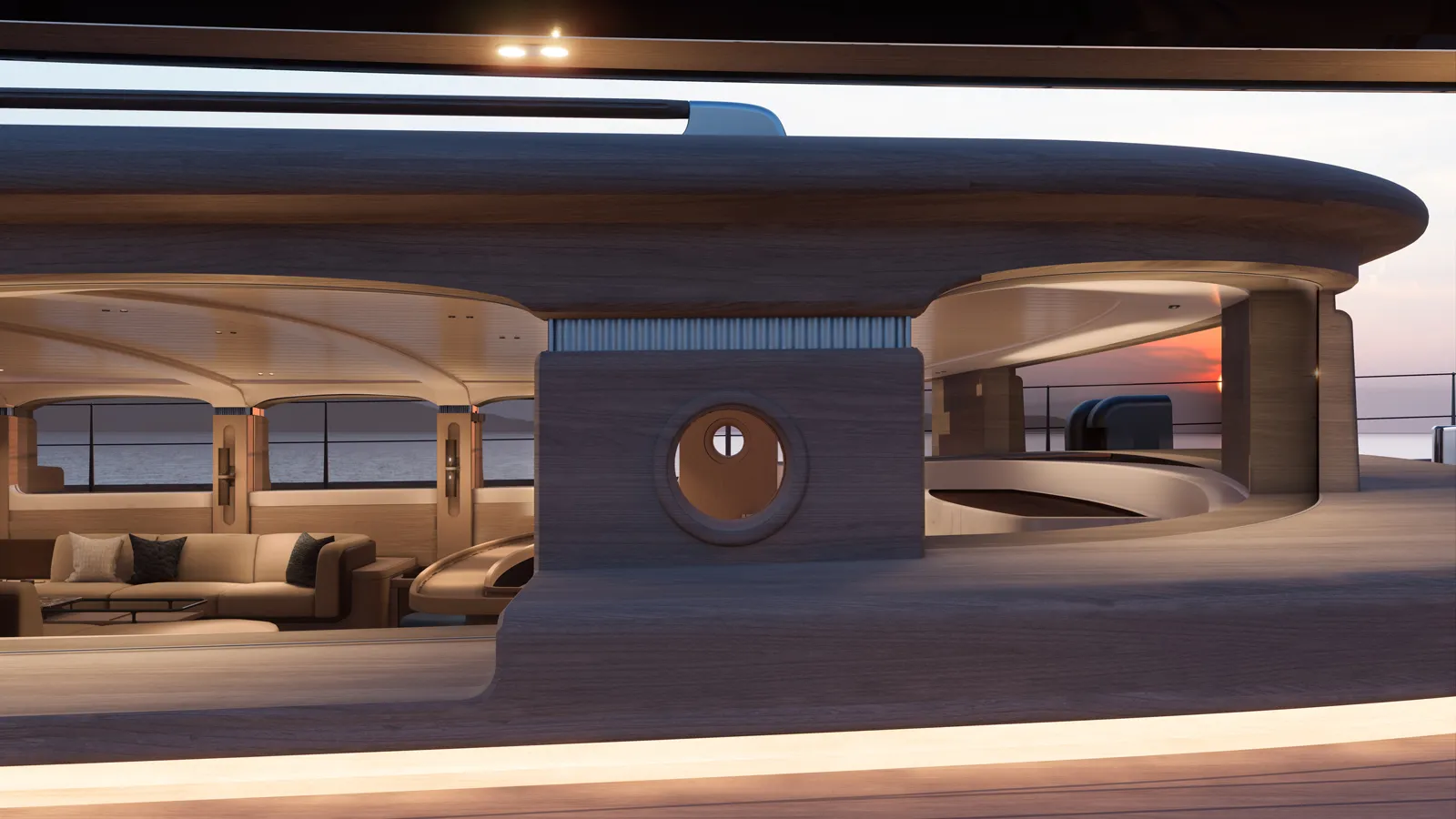
While the internal mechanics are strictly experimental, the exterior profile caters to the owner’s preference for classic sailing aesthetics. Vripack designed the 11.1-metre beam vessel with extended double-sided overhangs, a low superstructure, and a pronounced spoon bow. The deck hardware features matte finishes, contrasting against a custom hand-painted wood-effect metal transom and a metal stern cap. To enhance operational efficiency, electric windows completely seal the main cockpit without requiring crew intervention, while the modular outdoor furniture shifts on castors to convert the space from a lounge into a formal dining area for 12 guests.
Raw Materials and Spatial Flow
The internal architecture discards the highly polished, flawless finishes typical of the superyacht market. Instead, the design celebrates natural imperfections, utilizing 70 percent hand-selected oak veneer that highlights visible knots and grain variations. A central focal point is the Californian Lounge, featuring a multihued fire onyx coffee table wrapped in leather and furniture crafted from reclaimed pine bark. By eliminating a traditional full-beam engine room, the builders were able to incorporate a secret passageway for discreet crew movement, further separating the operational aspects of the yacht from the primary guest spaces. All technical data from the build is being made freely available through the FoundationZero platform to accelerate industry-wide development.