The transition from a hull mold to a functional sportfishing platform relies on simultaneous operational progress. Production for the second-generation Viking70 Convertible is currently accelerating. Hull Number One is moving through its final phases to serve as the official factory demonstrator for the upcoming Fort Lauderdale International Boat Show. Directly behind it, the next four hulls are advancing through the fabrication sequence, establishing a continuous cycle of coordinated construction across the entire plant.
Heavy Mechanical Integration
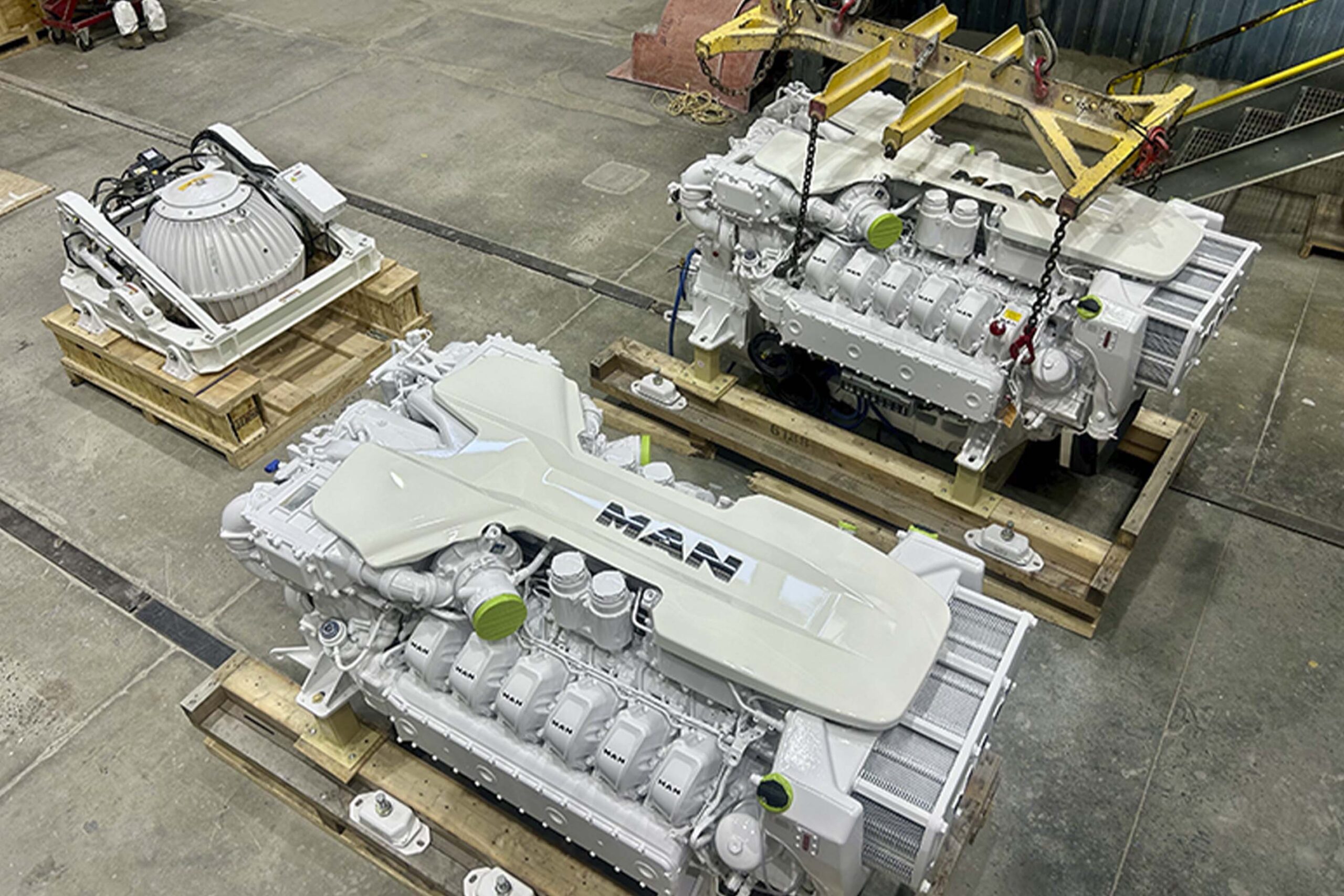
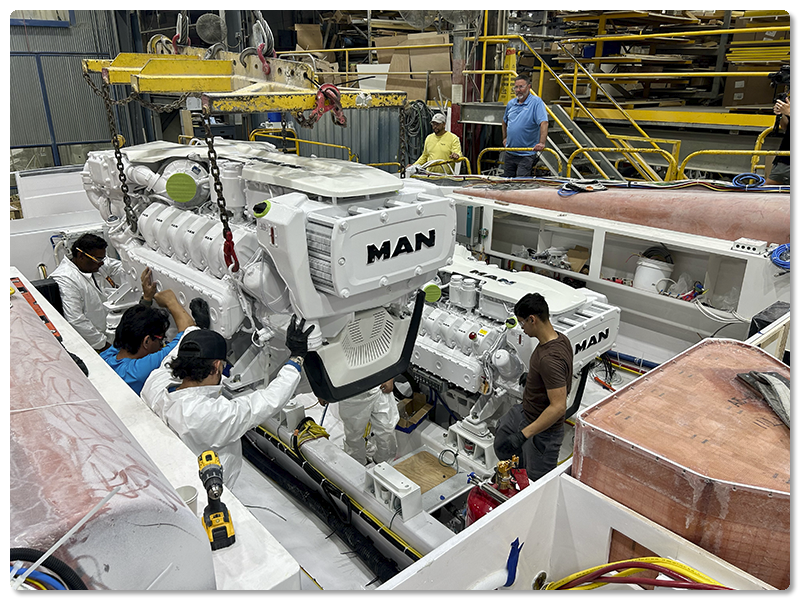
Dropping massive powerplants into a newly minted hull requires strict tolerances. For Hull Number Two, the mechanical department has staged twin 2,200 MHP MAN V12X diesels. Boatbuilders utilize overhead hoists to carefully position these 12-cylinder blocks directly onto the structural stringers. To handle the immense torque of the MAN engines, these specific stringers are heavily reinforced with integrated aluminum. The crew meticulously aligns the engines prior to bolting them down, ensuring a clean and highly rigid installation.
Stabilization and Staging
Modern sportfishing demands aggressive stabilization systems to mitigate offshore roll. Following the engine placement, the installation queue immediately shifts to the gyroscopic hardware. A Seakeeper 26 is positioned on the floor, waiting for its exact turn to be lowered into the machinery space. This sequencing ensures the heavy foundational components are locked into the hull structure before the more delicate routing and interior bulkheads enclose the area.
Image from Viking Yachts
Simultaneous Compartment Fabrication
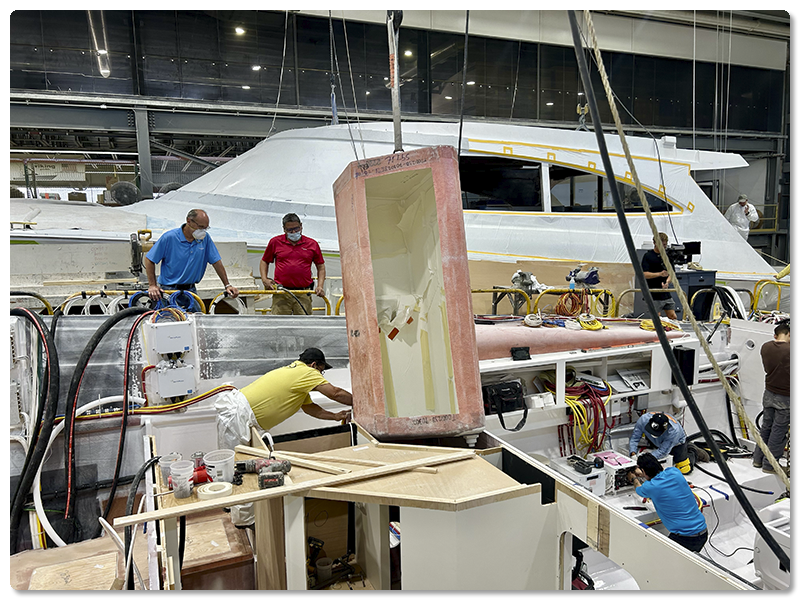
Once the primary blocks are seated, the engineroom becomes a hub of overlapping trades. Mechanical, electrical, carpentry, and plumbing crews board the hull simultaneously to route their respective systems. This overlapping schedule drives the build forward without creating distinct departmental bottlenecks. While the wiring and hoses are run below deck, the accommodations above also begin to take physical shape.
Interior Modules and Templates
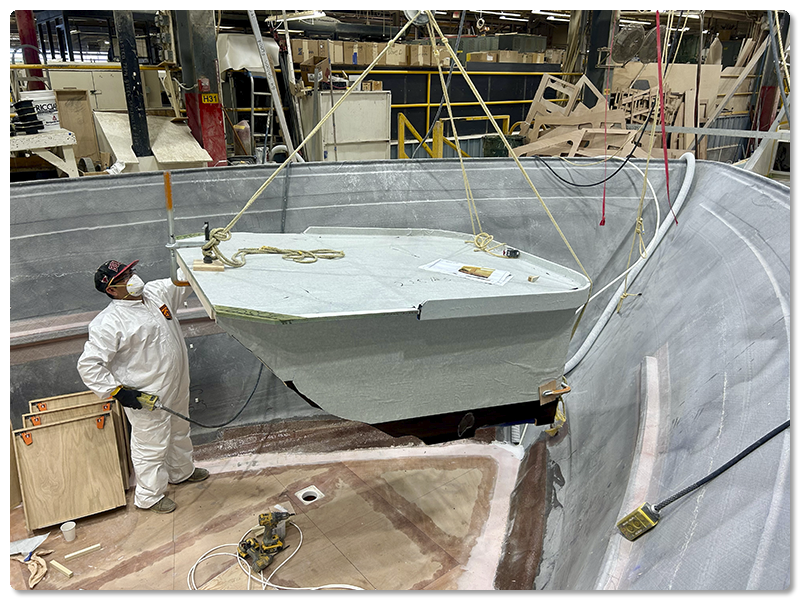
Rather than building every cabin strictly in place, modular units expedite the interior fit-out. Crews lower a complete shower module directly into the lower deck structure. In the forepeak, the forward VIP berth is carried into position with its drawer structures already visible. To ensure exact placement, rough carpentry installers like Hector Caballero rely on precise floor templates to guide each major furniture unit onto its designated footprint.
Interior Modules and Templates
Rather than building every cabin strictly in place, modular units expedite the interior fit-out. Crews lower a complete shower module directly into the lower deck structure. In the forepeak, the forward VIP berth is carried into position with its drawer structures already visible. To ensure exact placement, rough carpentry installers like Hector Caballero rely on precise floor templates to guide each major furniture unit onto its designated footprint.