- Technology and Innovation
Integrating Drive Systems and Maneuverability: The Austrian Concept Altering Marine Drafts
A Century of Marine Mechanics
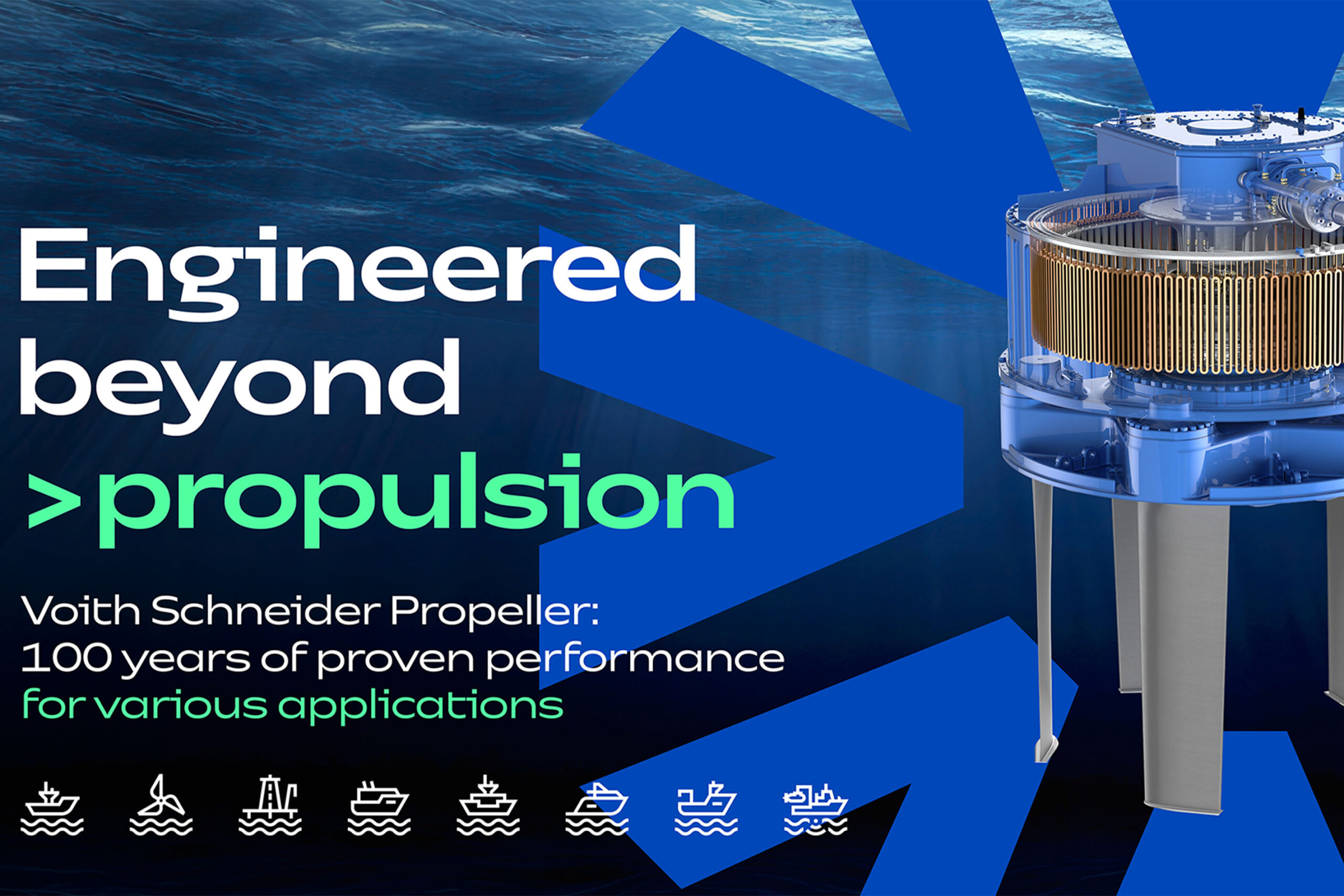
Establishing mechanical longevity in the maritime sector is incredibly rare. In 2026, the Voith Group is officially celebrating 100 years of the Voith Schneider Propeller (VSP). The original concept was formulated by Austrian engineer Ernst Schneider, who was born on June 18, 1894. His radically different propeller design underwent its initial model trials at the Vienna Ship Model Basin in 1926. Voith executives identified the sheer commercial potential of this design early in the process, refining the prototype into a market-ready industrial product.
The Vertical Blade Architecture
The operational mechanics of the VSP remain entirely distinct from traditional screw propulsion. The system utilizes several vertical blades arranged in a circular rotor that continuously adjust their pitch as they move along a circular path. This specific arrangement allows operators to vary thrust steplessly in any direction, providing immediate 360-degree maneuverability. Consequently, the propeller delivers rapid response times to helm inputs while effectively reducing vessel roll motions during heavy sea states. Operating at a comparatively low rotational speed, the system also minimizes underwater noise generation.
The 1928 Torqueo Application
Transforming a patent into an operational standard required significant capital and engineering discipline. The Voith brothers leveraged their dedicated mechanics to physically construct the Austrian engineer’s vision. By 1928, the Torqueo became the very first vessel equipped with a functional Voith Schneider Propeller. Today, the system is deeply entrenched in the commercial sector, operating heavily across tug and ferry fleets, dynamic offshore supply vessels, and specialized yachts.
The Electric eVSP Transition
Environmental compliance and operational overhead are currently forcing heavy offshore platforms to adapt. Addressing this, the manufacturer introduced the electric Voith Schneider Propeller (eVSP). This configuration pairs the proven hydrodynamic geometry of the original VSP with modern electric drive technology and intelligent control systems. Michael Rommel, Head of Sales & Application Management at Voith Turbo, noted that offshore operators demand solutions capable of reducing emissions and operating costs without sacrificing precise positioning.
Digital Simulation and Corporate Scale
Understanding the interaction between hull fluid dynamics and propulsion is critical for optimization. Voith utilizes advanced flow simulations and a dedicated marine test facility to validate new configurations. The scale of the backing organization is massive, as the Voith Group maintains around 21,000 employees and reports €4.8 billion in sales. To commemorate the centennial milestone, maritime professionals can test the unique steering parameters via the iVSP digital ship simulator, while Koehler at Maximilian Verlag has published a comprehensive technical book detailing the invention’s trajectory.