- Technology and Innovation
Fusing Sonar and Radar: A New Phase for Intelligent Vessel Systems
Fusing Surface and Subsurface Data
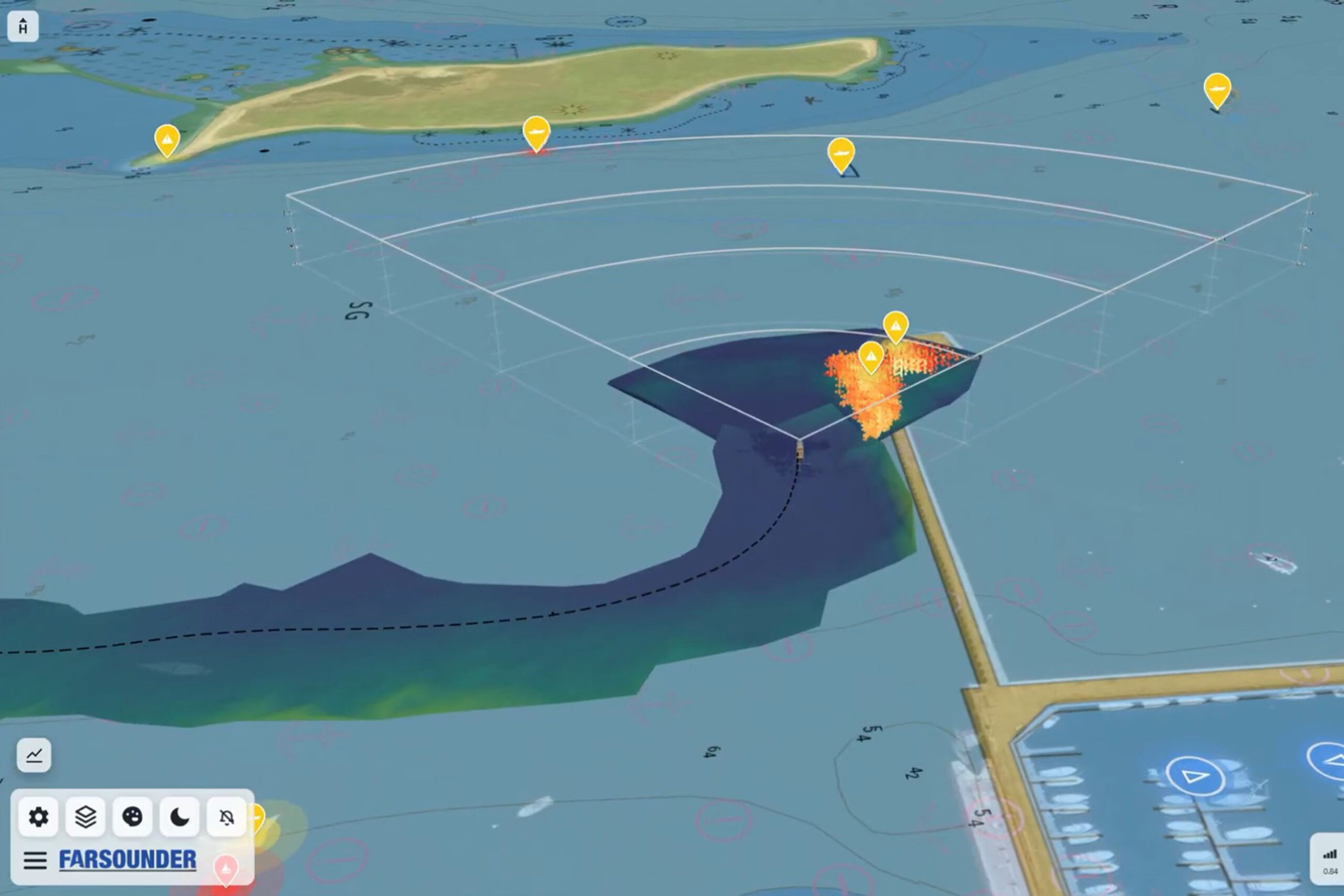
Operating a vessel in unfamiliar or congested waters demands complete situational awareness. FarSounder recently expanded the capabilities of its Argos Forward Looking Navigation Sonar (FLS) by integrating it with Tocaro Blue’s ProteusCore software. This collaboration directly bridges the gap between underwater mapping and surface-level radar perception. By pushing both data streams into the SonaSoft Lt navigation software, captains receive a unified operational picture, drastically reducing the cognitive load on the bridge.
The Argos 3D Foundation
Predicting hazards beneath the waterline is a critical requirement for expedition ships and superyachts. The Argos 3D FLS systems are explicitly designed to visualize the seafloor and the water column in real time. This technology provides a continuously updated 3D view, allowing vessels to operate safely in poorly charted regions or shallow coastal environments. By minimizing the likelihood of underwater impacts, the system prevents costly damage to the hull and protects fragile marine ecosystems.
Machine Learning on the Radar
Traditional radar requires constant manual adjustment, pulling attention away from actual navigation. Tocaro Blue addresses this by transforming marine radar into an intelligent perception sensor. The ProteusCore system utilizes machine learning models trained on over three million radar frames to detect, classify, and track objects. This software actively supports collision avoidance and vessel control by turning raw sensor data into actionable maritime intelligence.
Automating the Bridge
The integration physically alters how crews interact with their instruments. A primary feature of ProteusCore is its Autofocus capability, which automatically tunes radar settings like range and gain based on current sea and weather conditions. This automation eliminates the manual recalibration previously required by traditional setups. John Minor, CEO of Tocaro Blue, confirmed that adopting this system is a natural progression to give mariners an updated, modern radar experience.
The Complete Environmental Picture
Combining AI-driven radar processing with 3D forward-looking sonar creates a formidable navigation tool. Operators can now classify vessels, including non-AIS targets, while simultaneously identifying buoys, shorelines, and submerged obstacles within a single display. Matthew Zimmerman of FarSounder noted that modern mariners expect critical information to be presented clearly and without friction. This fusion of above- and below-water data ultimately ensures confident decision-making in low-visibility or highly complex maritime environments.