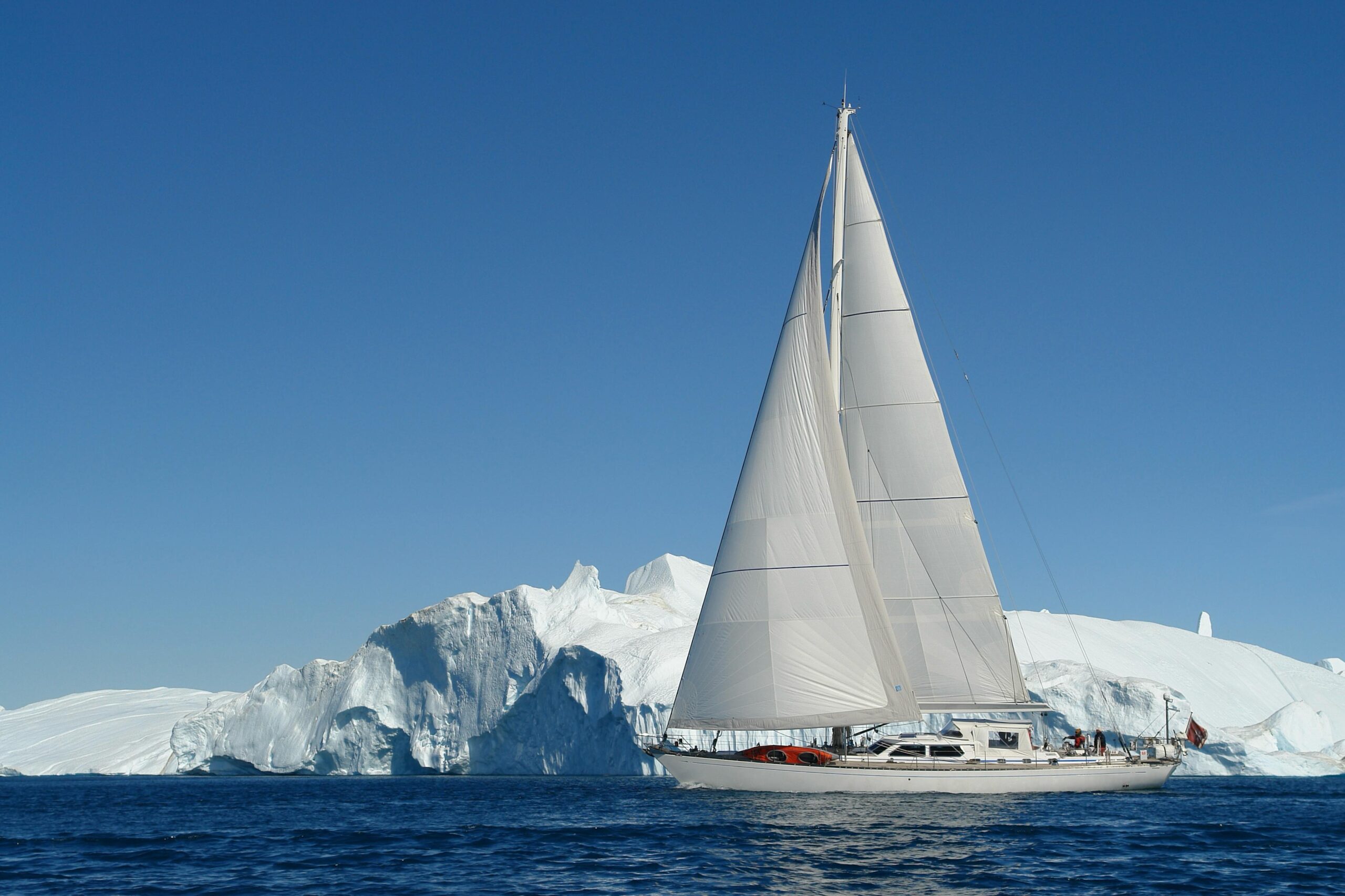
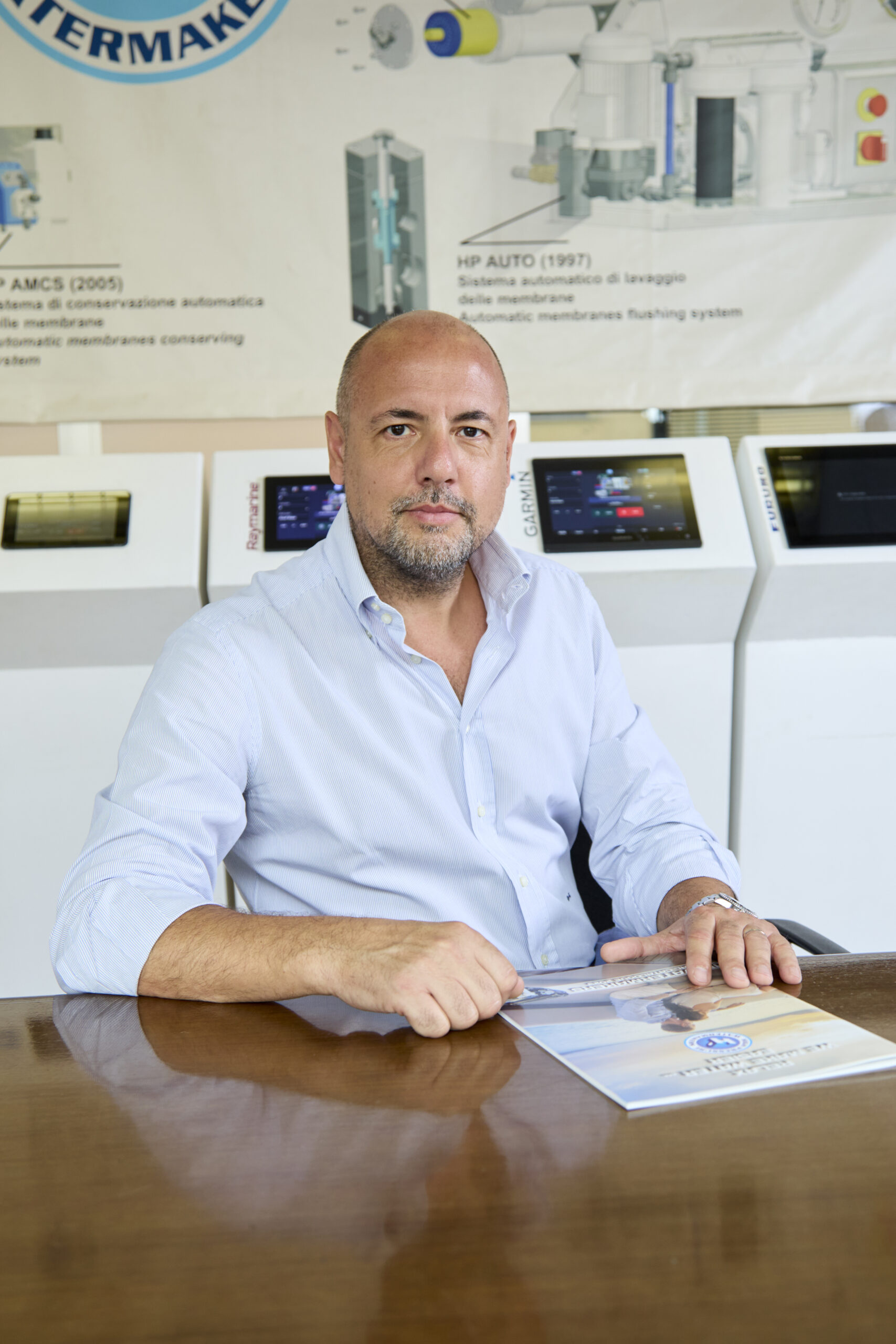
When outfitting a vessel for extended coastal cruising or severe ocean passages, owners frequently rely on consultants to filter out unnecessary equipment. Enrico Tettamanti brings 250,000 nautical miles of offshore experience to this role, having completed three circumnavigations across the globe. Specializing in project management for fully custom yacht builds, Tettamanti focuses heavily on the specific mechanical choices that keep a vessel operational in remote environments. He personally utilizes an HP Watermakers SC 140 desalination system on his Hallberg-Rassy yacht, citing the manufacturer’s heavy automation as a critical advantage.
Preserving the Membranes
Intermittent use is the leading cause of watermaker failure on leisure vessels. When a system sits inactive, bacteria can quickly proliferate on the membrane surfaces, drastically reducing production capacity. HP Watermakers addresses this directly with the Automatic Membrane Conservation System (AMCS). Working in tandem with the RP-TRONIC unit, the AMCS automatically doses sodium metabisulfite during the flushing cycle. This mechanical intervention preserves the membranes during long periods of inactivity, making it an essential feature for weekend boaters who often overlook routine maintenance.
Production Capacity and Network Integration
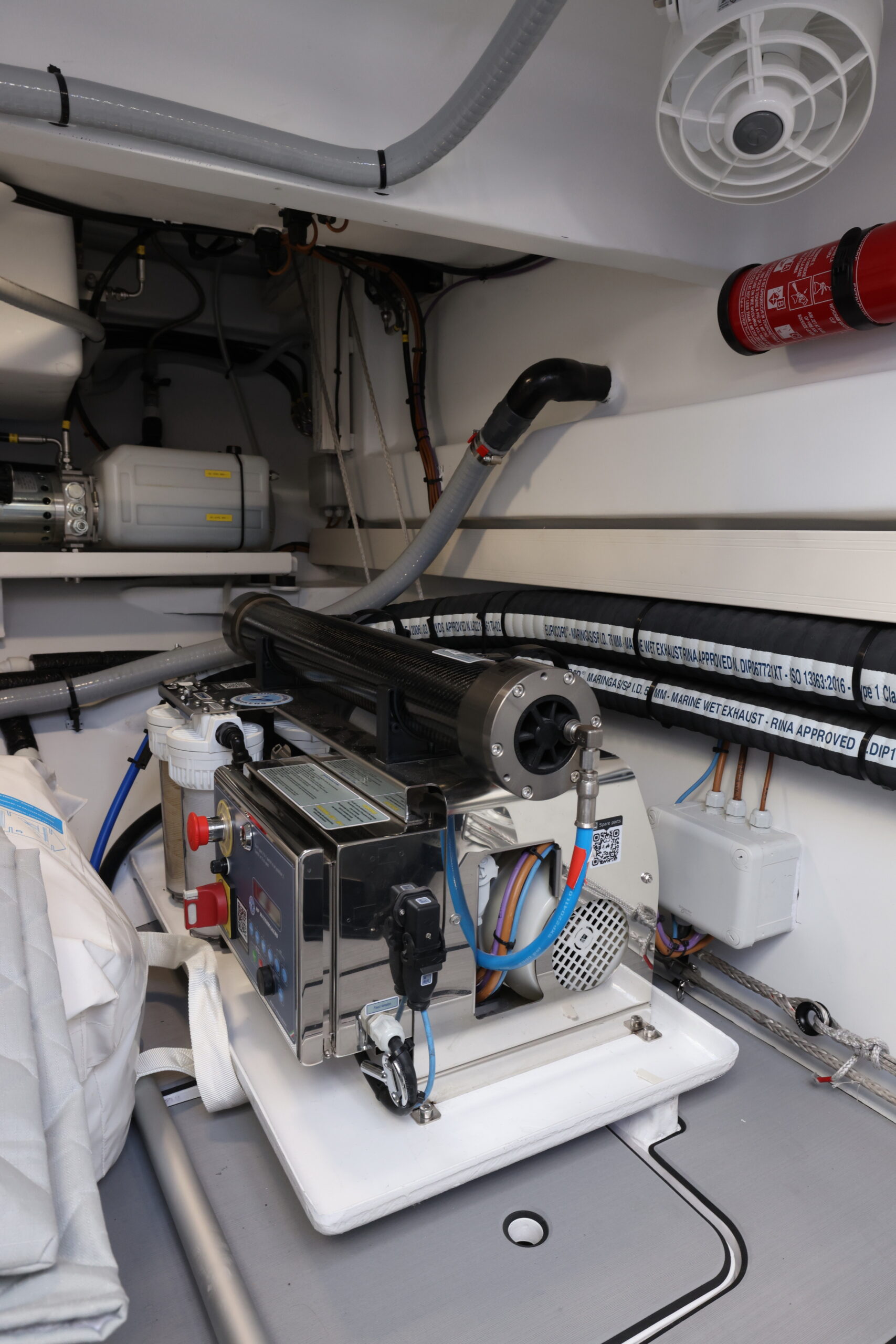
Tettamanti generally advises owners to select watermakers with production capacities between 150 and 300 liters per hour, noting that maximizing output in the shortest possible time prevents excessive generator use. He confirms that in his direct experience, HP Watermakers systems consistently deliver their advertised production figures.
Image from HP Watermakers
The Automation Advantage
The primary risk with any mechanical system is intermittent usage. Tettamanti notes that weekend boaters, who often lack professional crew, frequently overlook system maintenance. This is where HP Watermakers secures its technical advantage through strict automation. The RP-TRONIC system utilizes a motorized, high-precision micrometric valve that automatically regulates operating pressure to optimal levels, completely eliminating manual adjustments in the engine room.
Preserving the Hardware
This automated pressure management works directly alongside the Automatic Membrane Conservation System (AMCS). When a watermaker sits unused, bacteria can clog the membranes and drastically reduce production capacity. AMCS counters this by automatically dosing sodium metabisulfite during the flushing cycle, thereby preserving the membranes and significantly extending their operational lifespan without crew intervention. Tettamanti argues these two features are critical for ensuring the system continues to operate efficiently under limited supervision.
Digital Integration at the Helm
Modern maritime operations demand immediate access to system analytics. Tettamanti emphasizes that optimizing energy consumption requires onboard systems to communicate efficiently. HP Watermakers achieves this through Part-NET, a user interface highly compatible with leading chartplotters like Garmin, Raymarine, and Furuno. This integration connects the desalination unit directly to the primary displays, allowing the captain to monitor all parameters and operations directly from the helm station. Removing the need to physically enter the engine room to check system status provides a massive operational convenience.