- News and Industry Insights
Documenting the 32-Meter Giant: The Gitana Team Releases New Footage
Documenting the Flight Process
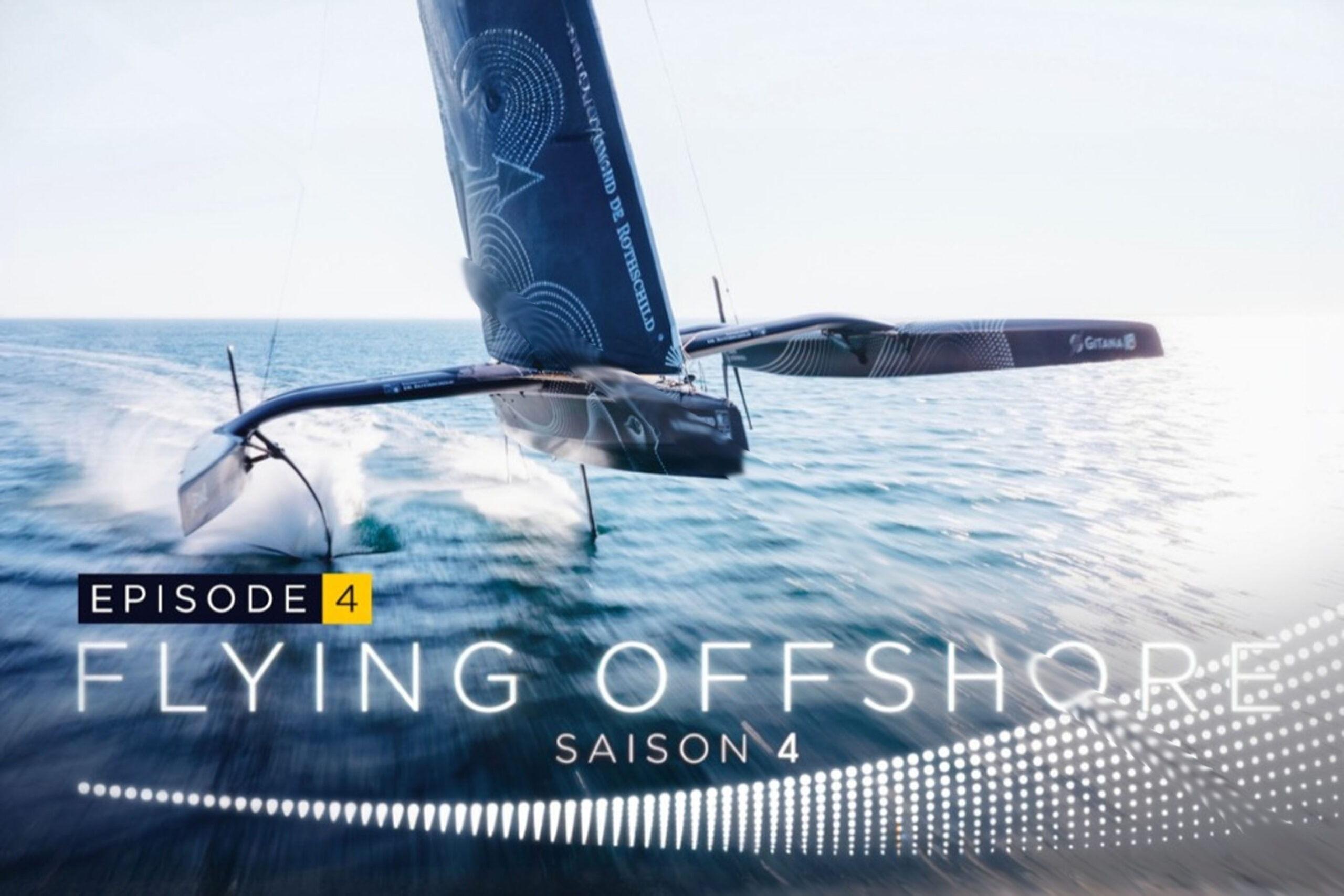
Marine engineering requires extensive testing to translate carbon concepts into offshore realities. To capture this critical development phase, the Gitana Team is producing a dedicated documentary series titled ‘Flying Offshore’. The episodic release follows the 32-metre Gitana 18 trimaran through its initial construction and direct transition onto the water. The newest footage specifically tracks the crew as they execute their first tacks in full flight mode, providing viewers an unvarnished look at the functional testing required for an Ultim-class multihull.
The Y-Shaped Appendage
Lifting a 19-tonne platform out of the water heavily relies on radical foil geometry. Episode four highlights the installation and immediate testing of the starboard foil, a swinging Y-shaped appendage featuring a total wingspan exceeding 10 metres. Drawing direct inspiration from America’s Cup monohull technology, this adjustable carbon structure provides the necessary lift to permanently elevate the massive 23-metre-wide platform above the ocean surface.
Light Air Capabilities
Achieving sustained flight usually demands heavy offshore breezes, but the Gitana 18 was engineered to excel across a broader wind spectrum. During the maiden flight captured in the recent video release, skipper Charles Caudrelier managed to get the vessel airborne in merely 10 to 13 knots of wind off the coast of Belle-Île. The crew achieved stable flight within 20 minutes of establishing proper trim, proving the efficiency of the new appendages even in marginal conditions.
Physical and Mental Preparation
Handling a vessel capable of maintaining 40-knot average speeds imposes severe strain on the human operator. The third episode of the documentary, ‘The Sailor and the Machine,’ thoroughly analyzes the rigorous conditioning Caudrelier undergoes to pilot this specific craft. The footage details how the skipper prepares to manage the integrated flight control systems, automated mechanical trims, and the sheer physical demand of solo-piloting a 105-foot flying trimaran across unpredictable ocean states.
The Route du Rhum Target
The entire testing schedule and video series point directly toward a specific competitive deadline. With the Route du Rhum – Destination Guadeloupe starting on November 1, the team operates under a strict five-month preparation window. The documentary illustrates the urgency surrounding the installation of the port foil and the subsequent offshore training blocks. By combining real-world offshore hours with virtual simulation runs on the boat’s digital twin, the Gitana stable is systematically preparing their latest platform for the transatlantic starting line.