- Lifestyle and Culture
Davit Dilemmas: Which Launch System Actually Survives the Real World?
The Lifeblood of the Anchorage
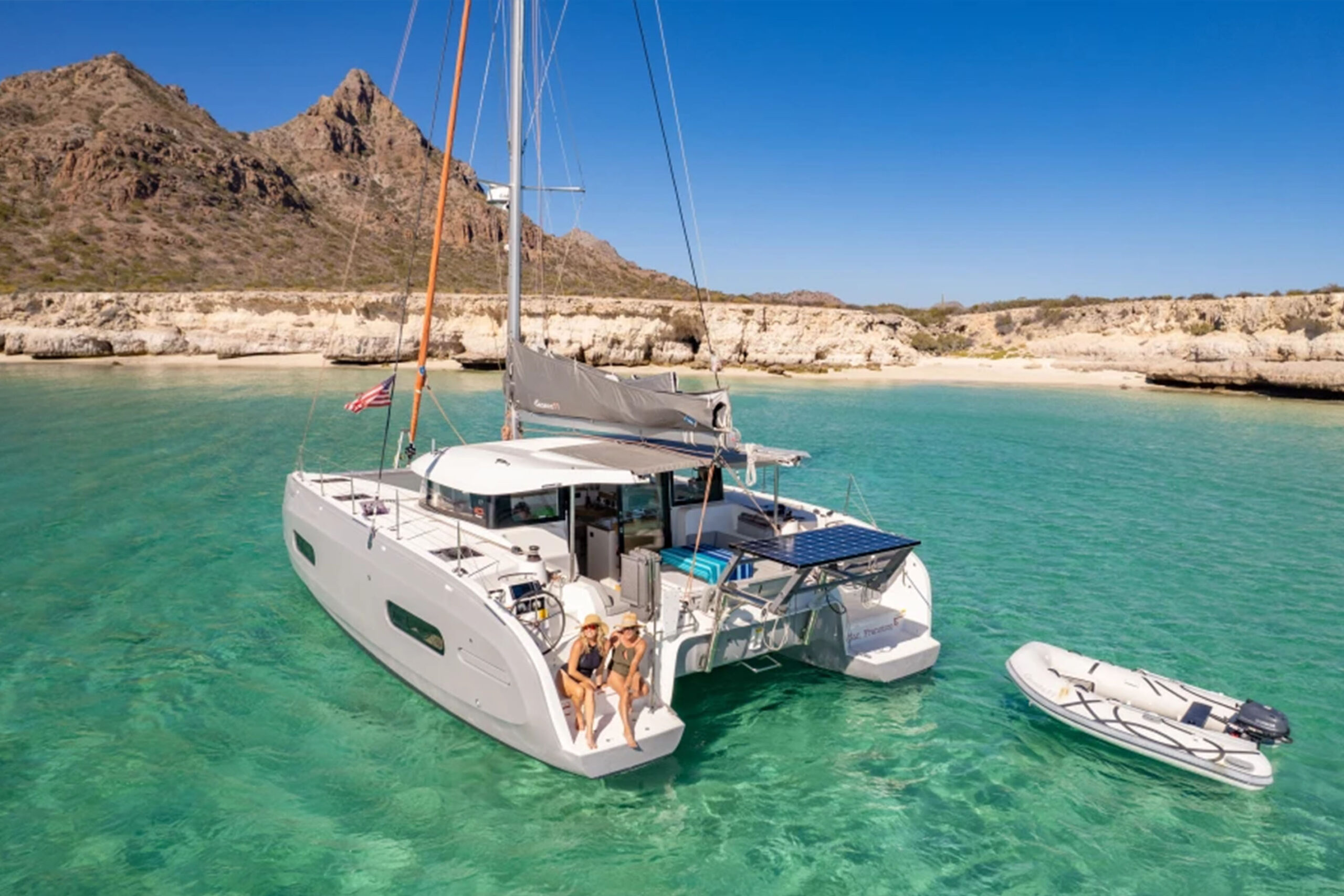
For a catamaran, the tender is far more than a simple accessory; it is the primary vehicle for shore access, supplies, and exploration. Because these vessels are built to favor remote anchorages over crowded marinas, the hardware used to launch and recover that tender becomes a critical point of failure or success. The team at Excess Lab has recently pulled back the curtain on the design logic behind these systems, moving past the marketing gloss to look at the real-world utility of davit installations.
Classic Fixed Hardware: The Rugged Standard
The classic fixed davit remains the benchmark for those who value simplicity and structural grit. By utilizing a fixed system attached to the primary structure of the catamaran, owners gain a setup with almost zero moving parts to wear out. The advantages are clear: high rigidity against waves, cost-effectiveness, and the ability to mount solar panels where they won’t be shaded by the boom. For a cruiser focused on long-range autonomy, the ability to carry “toys” like paddleboards alongside the tender makes this “simplistic” solution hard to beat.
Pivoting Kinematics: The Compact Alternative
Pivoting davits offer a more dynamic approach, transferring loads into the coachroof and away from the hulls. This system’s rotational movement is a major win in tight marinas, as it brings the tender forward and closer to the boat when lifted. However, this mechanical complexity comes with a cost. These systems are more vulnerable to lateral loads and involve pins and moving parts that inevitably face wear in salt-air environments. Furthermore, for catamarans like the Excess range that feature an aft-beam mainsheet track, this setup is often a non-starter.
Under-Platform Lifting: The Stealth Play
At the high end of the spectrum, under-platform systems like Tenderlift® offer a discreet, clean aesthetic that preserves a panoramic view from the cockpit. These multifunction platforms can double as a “beach club” when the tender is deployed. Yet, the trade-off is significant. This is the heaviest solution available, requiring massive structural reinforcement and complex hydraulics or electrics in direct contact with the sea. For the minimalist sailor, the lack of solar capacity and the precision required to dock the tender on fixed chocks in a swell can be a dealbreaker.
The Verdict from the Lab
There is no “perfect” system, only the system that matches your specific mission. Excess Lab’s investigation reminds us that every choice on a yacht is a trade-off between weight, cost, and complexity. Whether you prefer the unyielding strength of fixed aluminum or the sleek lines of a hydraulic platform, the logic remains the same: your hardware must work when the conditions don’t. As the 2026 season approaches, understanding these mechanical nuances is the first step toward a more capable life at sea.