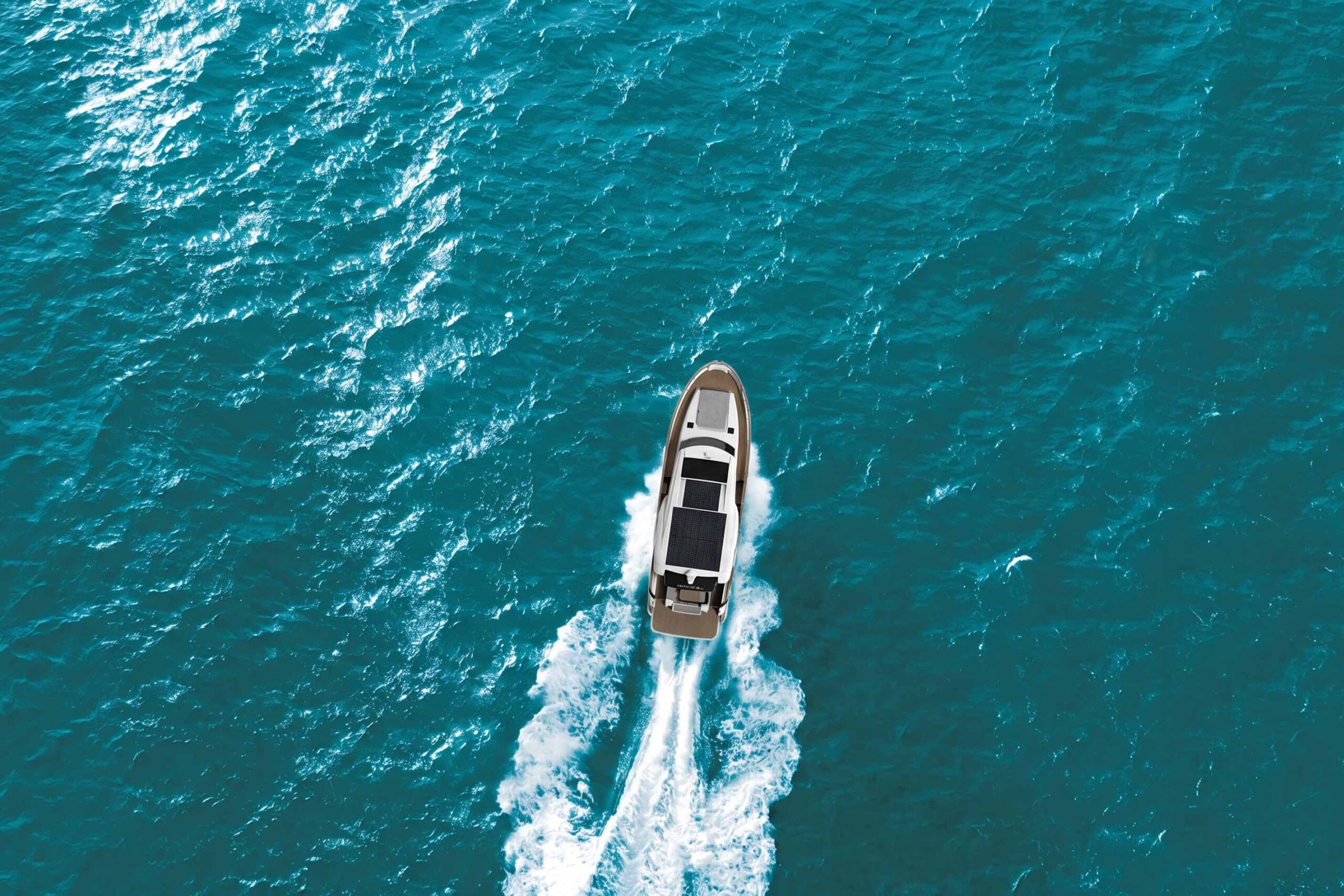
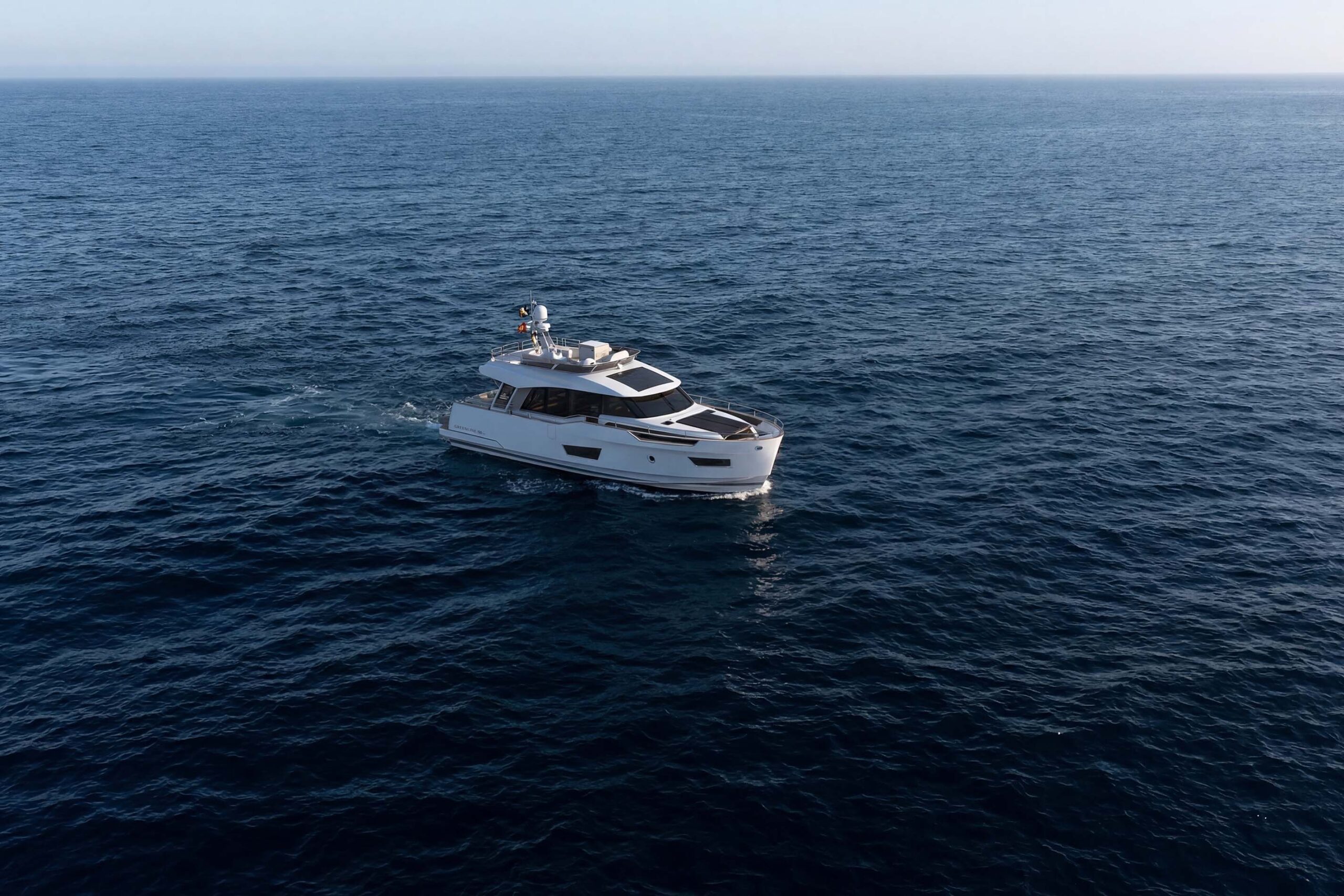
Replacing a top-selling hull that has dominated a shipyard’s portfolio for over a decade requires an aggressive design approach, which is why Greenline Yachts is launching two structurally distinct variations of its new platform. The upcoming Greenline 50 will officially replace the long-running Greenline 48, yet it approaches the mid-range cruiser market through two entirely separate design philosophies. By simultaneously developing the Greenline 50 Coupe and the Greenline 50 Fly, the Slovene shipyard targets two specific tiers of luxury buyers, separating low-profile, single-level living from multi-deck, view-focused open cruising.
Architecture of the 50 Coupe
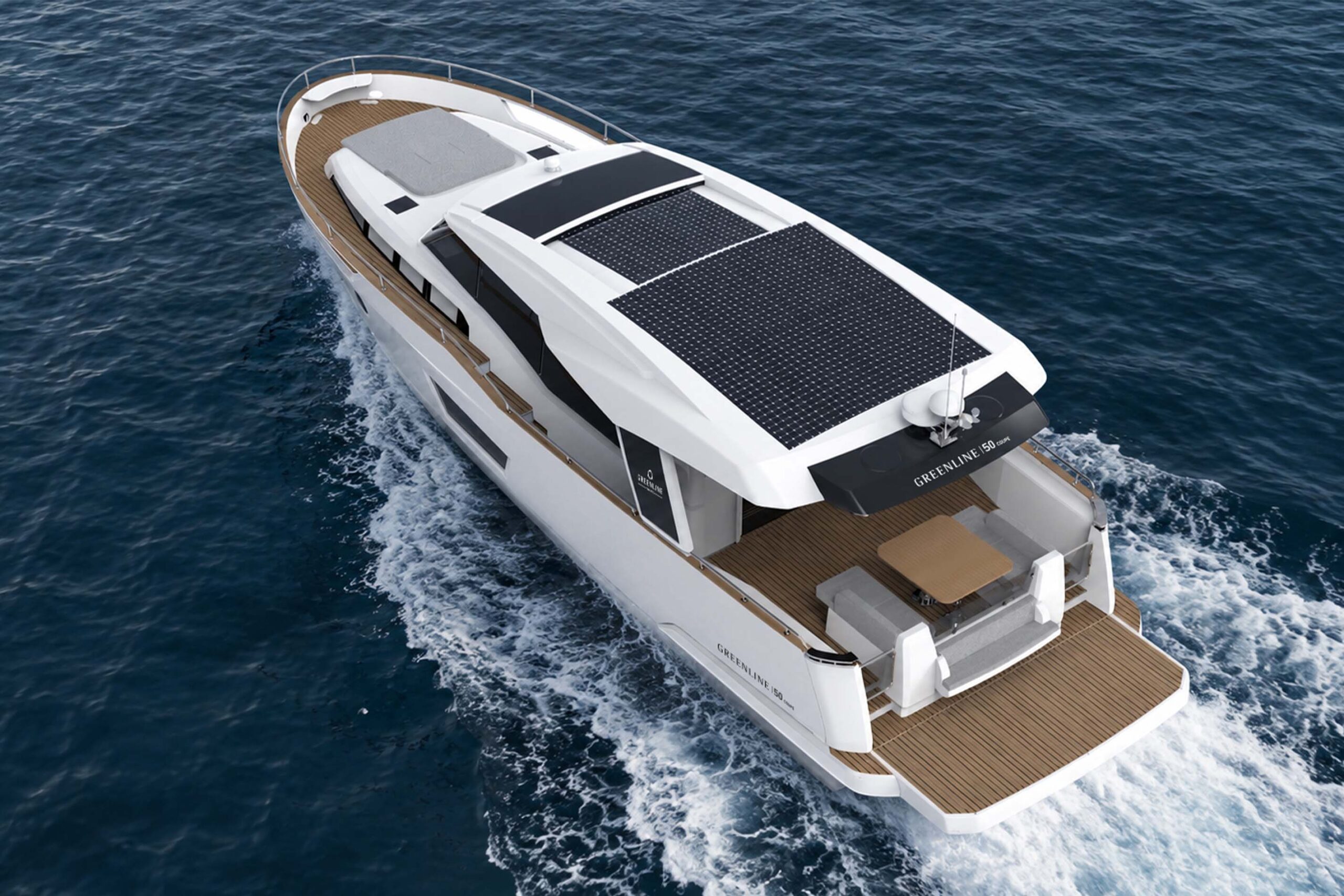
The Greenline 50 Coupe is engineered specifically around the concept of effortless, single-level spatial flow. The main deck structure forms a continuous, uninterrupted living zone that physically connects the aft cockpit, the central salon, and the primary helm station without a single step or vertical transition. This architectural approach creates a highly stable, secure environment that appeals to owner-operators who prioritize simplicity of movement and a lower center of gravity. Large panoramic windows and expansive all-round glazing ensure that the entire enclosed salon remains continuously connected to the surrounding marine environment.
Image from Greenline Yachts
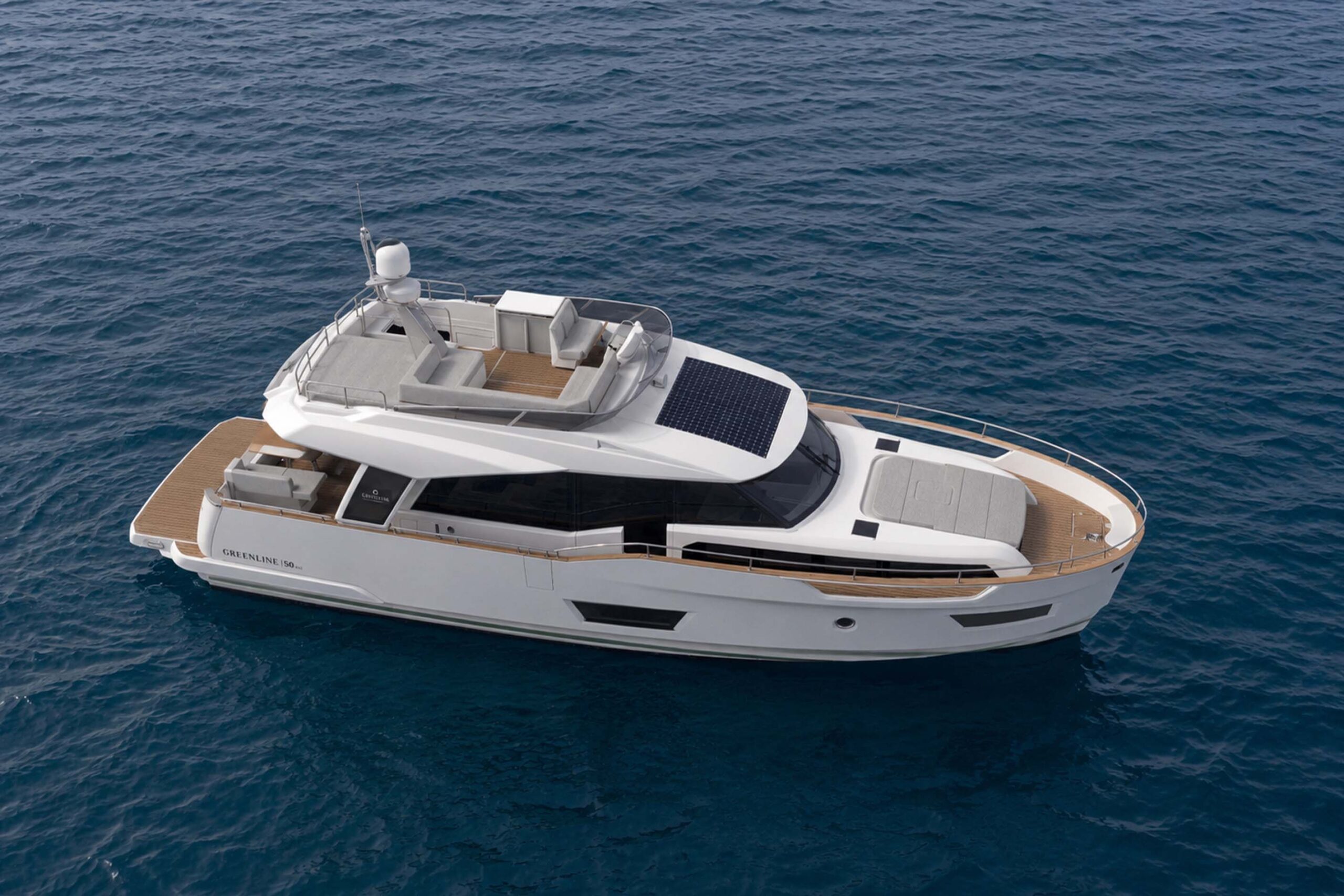
Perspectives of the 50 Fly
The Greenline 50 Fly alters the structural narrative by extending the yacht’s vertical profile to incorporate a fully functional upper deck. The flybridgeserves as the primary social center of the vessel, introducing an entirely separate outdoor living area complete with a secondary helm station built directly into the coachroof structure. To support extended entertainment profiles away from the main deck, this upper level integrates generous lounge seating, a central dining table, and a dedicated wet bar fitted with an integrated refrigerator on the port side. This configuration shifts the cruising experience upward, trading the low-profile lines of the Coupefor panoramic visibility and open-air freedom.
Common Technical Substructures
Despite their architectural split above the deck line, both the Coupeand the Flyshare a robust, identical technological foundation built into the hull. The platform features an evolutionary three-cabin layout below deck that offers flexible accommodations, allowing guest spaces to be arranged as either twin or double berths alongside up to three individual bathrooms. The aft section of both hulls is highly customizable, letting owners choose between a massive storage locker that swings open from the bathing platform for water toys, or a dedicated skipper cabin complete with bedding, a wet toilet, and a compact navigation console.
Sustainable Power Allocation
The core distinction of the Greenlinebrand remains deeply embedded in the propulsion choices available for both the Coupe and Fly variants. The vessels are designed to run their entire hotel load operations on silent electric power for extended periods, drawing energy from a massive onboard battery bank supported by high-output solar panel arrays. This green infrastructure integrates seamlessly with either traditional, highly efficient diesel engines or Greenline’sadvanced 6G hybrid drive systems. This allows owners of both models to experience a serene, vibration-free environment at anchor while maintaining serious long-range offshore cruising capabilities.