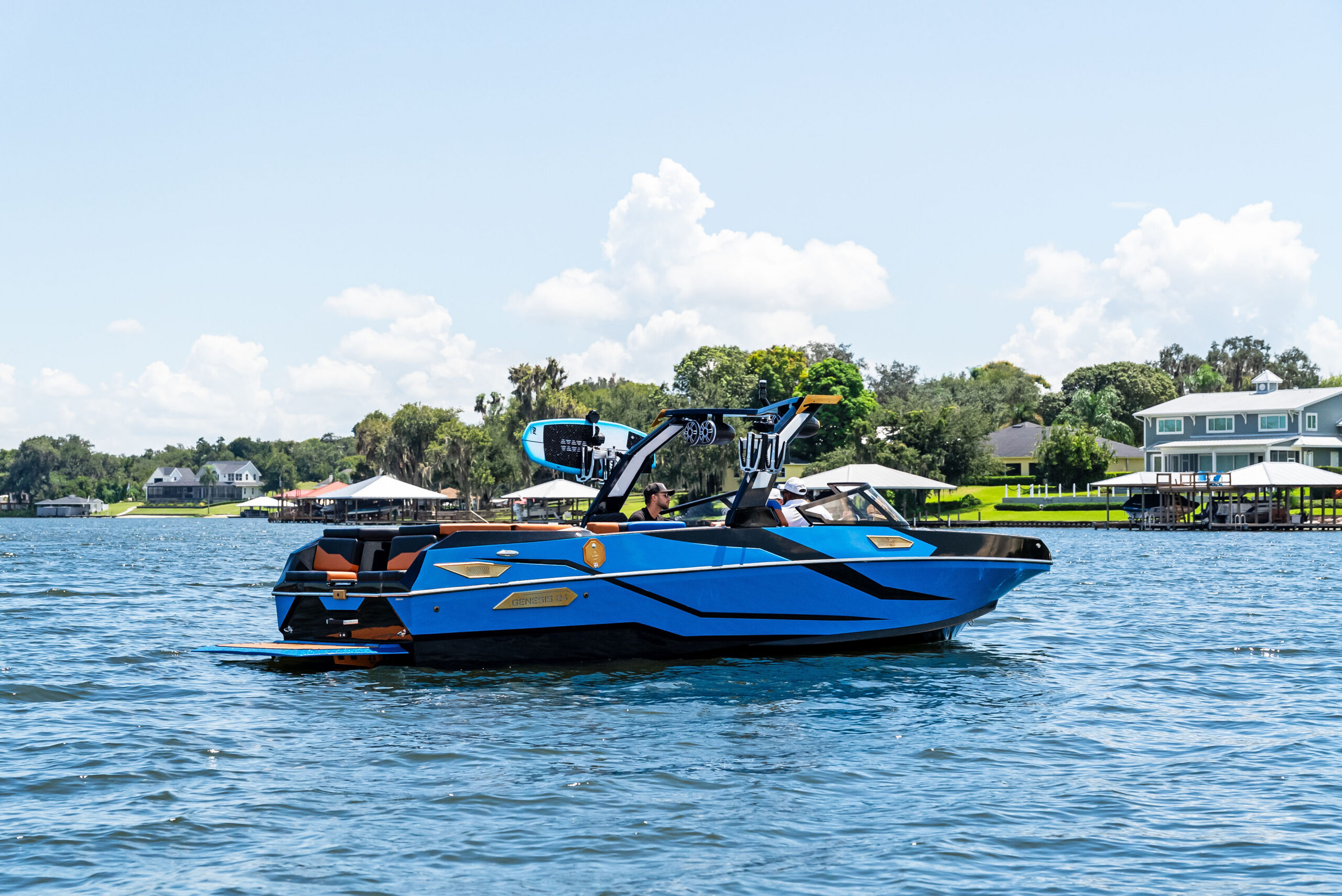
The landscape of marine propulsion shifted inside the Miami Beach Convention Center, at Booth MB2090, Genesis Marine Technologies joined forces with Indmar Marine Enginesto unveil the Trident Hybrid Powertrain™. This wasn’t merely a product launch; it was a demonstration of a software-defined architecture intended to redefine how energy is utilized on the water. By presenting this system alongside the Genesis 24, the team has confirmed that the transition to hybrid power is no longer a concept—it is a high-performance reality.
Decoupled Propulsion Architecture
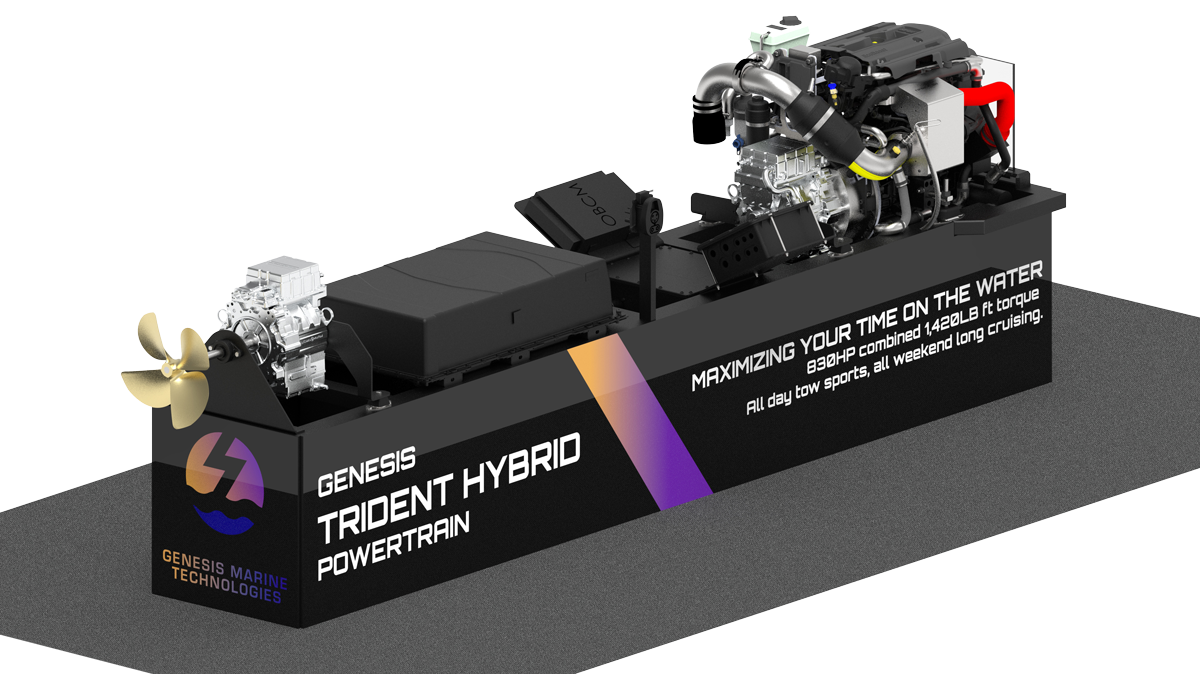
The core of the Tridentsystem is a series-hybrid architecture that effectively decouples power generation from propulsion. This design allows for total control over noise and performance by utilizing a compact, high-efficiency Auxiliary Power Unit (APU) for continuous onboard power. By running the APU at steady-state operation, the system maximizes fuel longevity while high-torque electric motors handle the immediate, aggressive demands of the water. It is a modular system built to integrate into both new builds and existing vessels across the recreational and commercial sectors.
Image by Genesis Marine Technologies
The 5,000 HP Benchmark
The raw numbers associated with the Tridentare staggering. The architecture is capable of supporting over 5,000 HP and 10,000 NM of torque. This massive output is supported by a scalable battery architecture that is defined by the specific application rather than a fixed size. To ensure these systems survive the harsh marine environment, Genesishas utilized marine-rated inverters and active thermal management. Furthermore, the inclusion of a 5G transponder allows for over-the-air updates and preemptive maintenance, ensuring the hardware remains at the cutting edge through software refinements.
The Genesis 24: Aerospace Precision
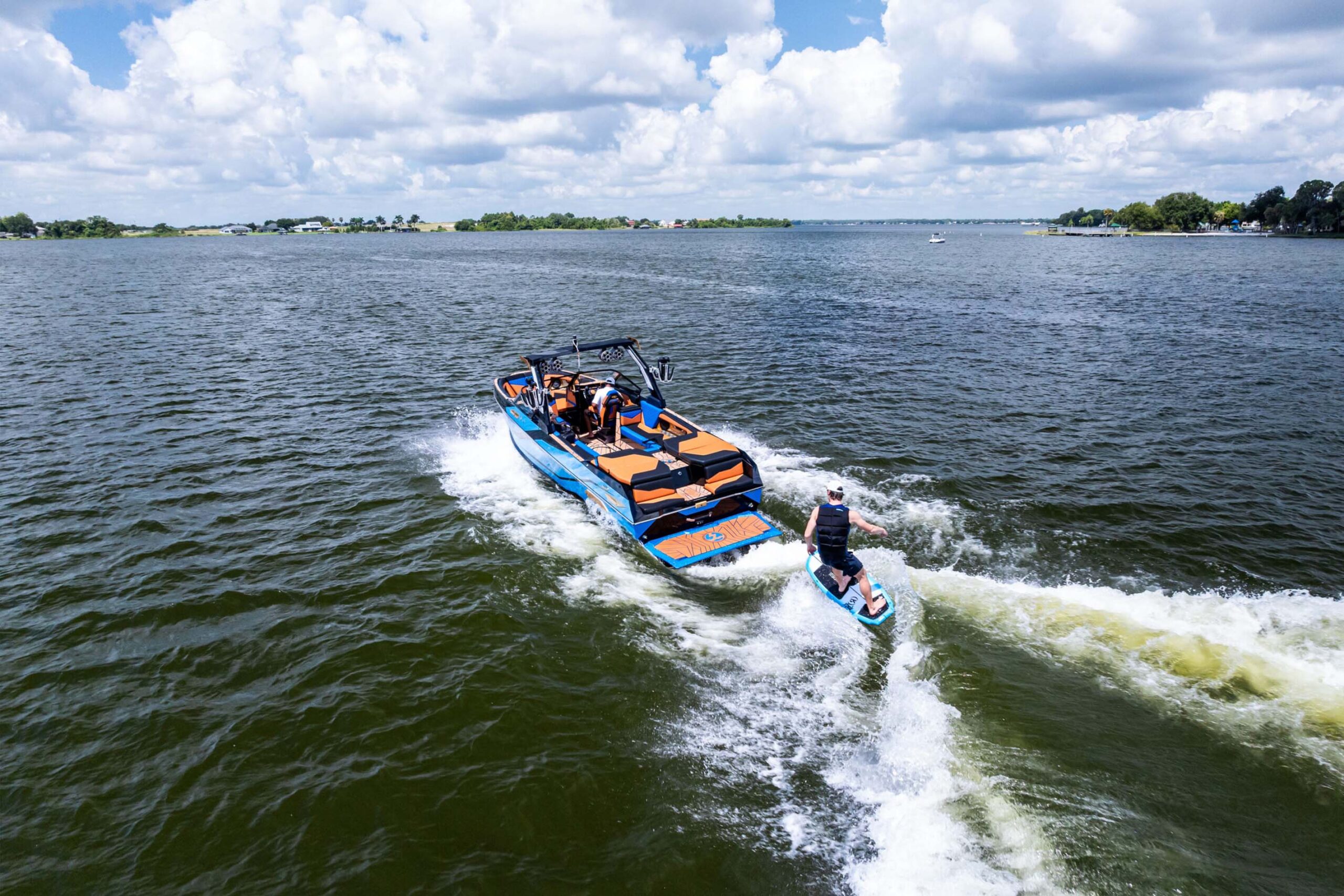
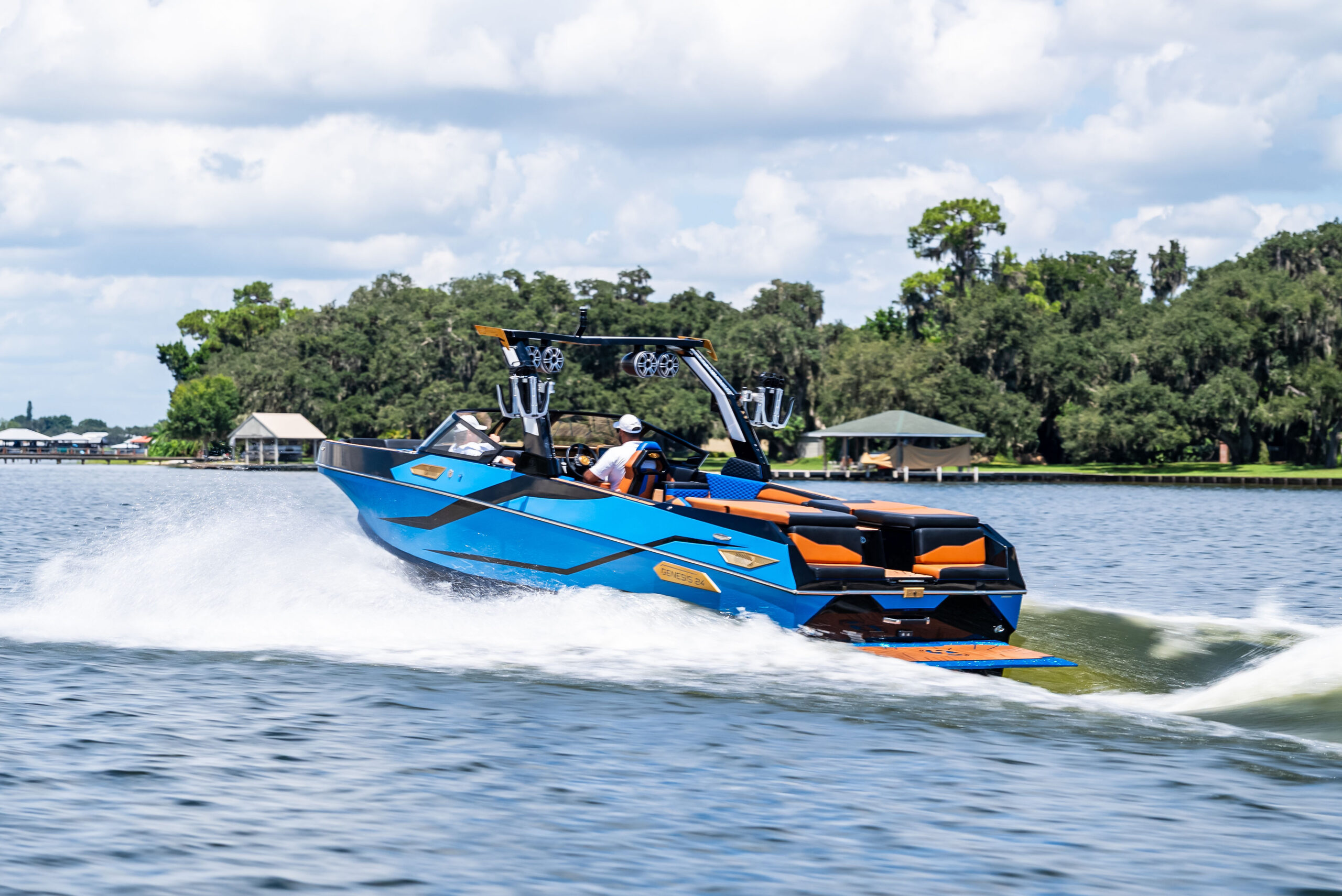
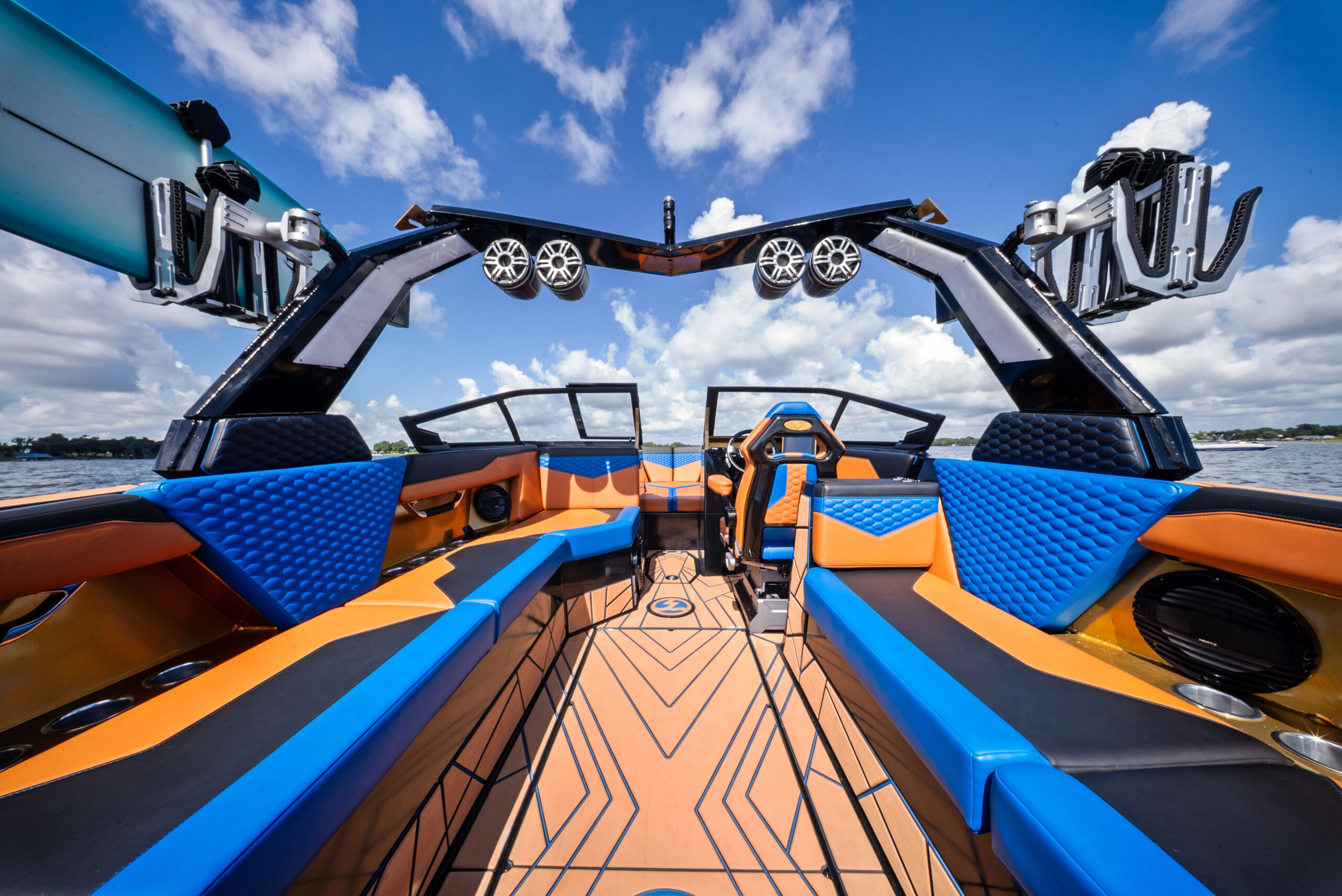
To showcase the Trident’scapabilities, the Genesis 24 made its debut as the world’s first hybrid wakesurf boat. This vessel utilizes a fully aerospace composite construction, resulting in a lighter, more rigid hull that can withstand the torque generated by its 860 HP combined onboard power. The build quality is focused on a zero-compromise approach, where the engine and electric drive communicate intelligently to replenish the battery bank while maintaining full performance for the rider.
Redefining the Surf Wave
Wakesurfing demands massive displacement, which traditionally requires massive fuel consumption. The Genesis 24 addresses this through a displacement-optimized, super deep-V hull designed to create powerful waves while achieving an 80% reduction in fuel usage. This energy-efficient geometry allows for “Silent Surfing” all day long. Control is centralized through the Rear Surf Command Center, an intuitive interface that manages propulsion, ballast, and energy flow, allowing the operator to focus on the wave rather than the mechanics.
Image by Genesis Marine Technologies
A New Standards of Connectivity
The alliance between Genesisand Indmaris built on a vision of proactive maintenance. Real-time diagnostics track the health of the hybrid system continuously, identifying potential issues before they ever affect a session. As the Miami show continues, the message from Booth MB2090 is clear. The future of the industry belongs to those who can provide more time on the water with less fuel and zero compromise on raw performance.