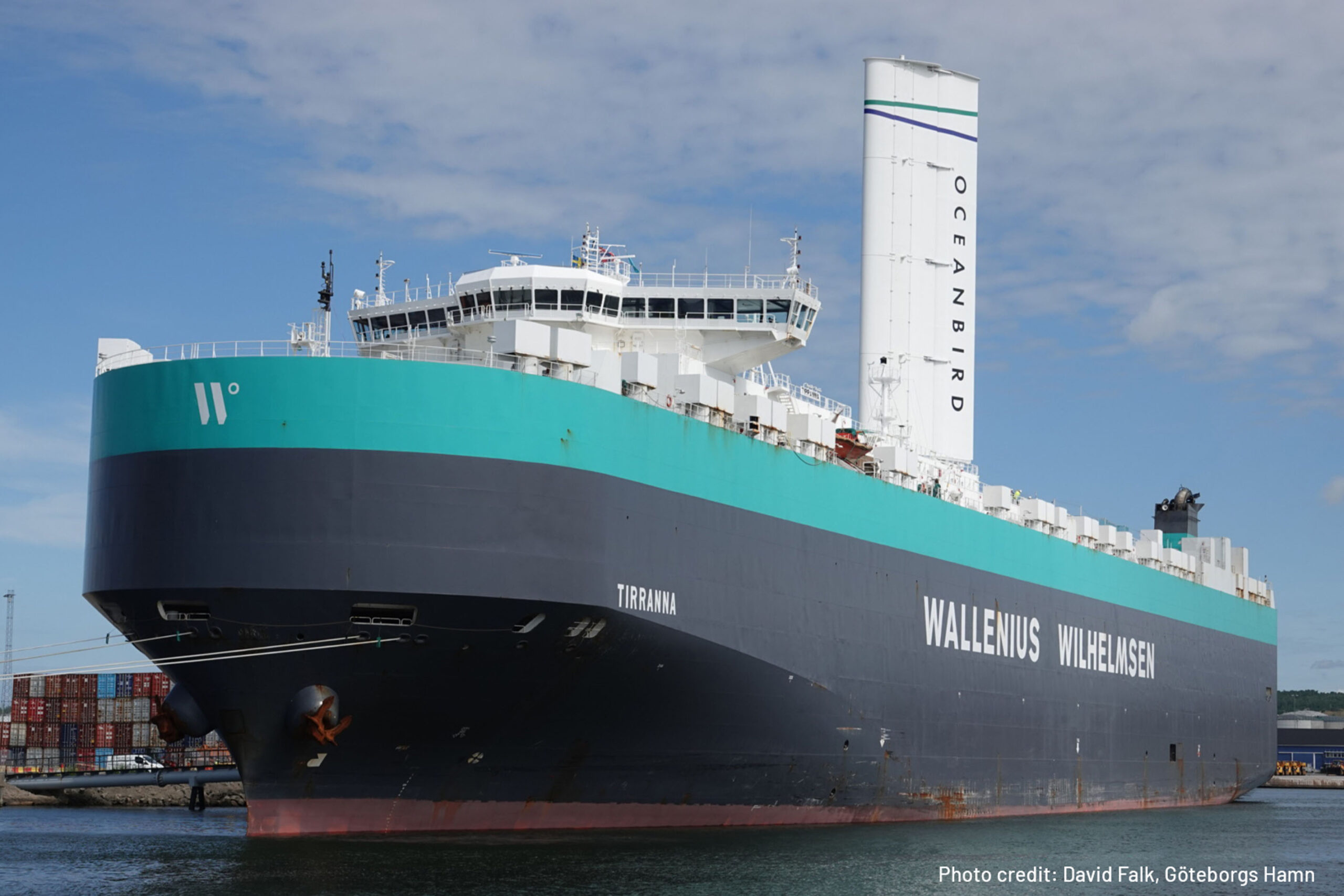
The global shipping industry faces pressure to cut emissions without sacrificing cargo capacity. Oceanbirdaddresses this operational hurdle with the installation of its Wing560 on the 230-metre car carrier Tirranna, owned by Wallenius Wilhelmsen. The project represents a direct application of wind-assisted propulsion on a commercial scale, utilizing a massive rigid wing sail to capture wind energy and offset traditional engine loads.
Executing the Retrofit in Rotterdam
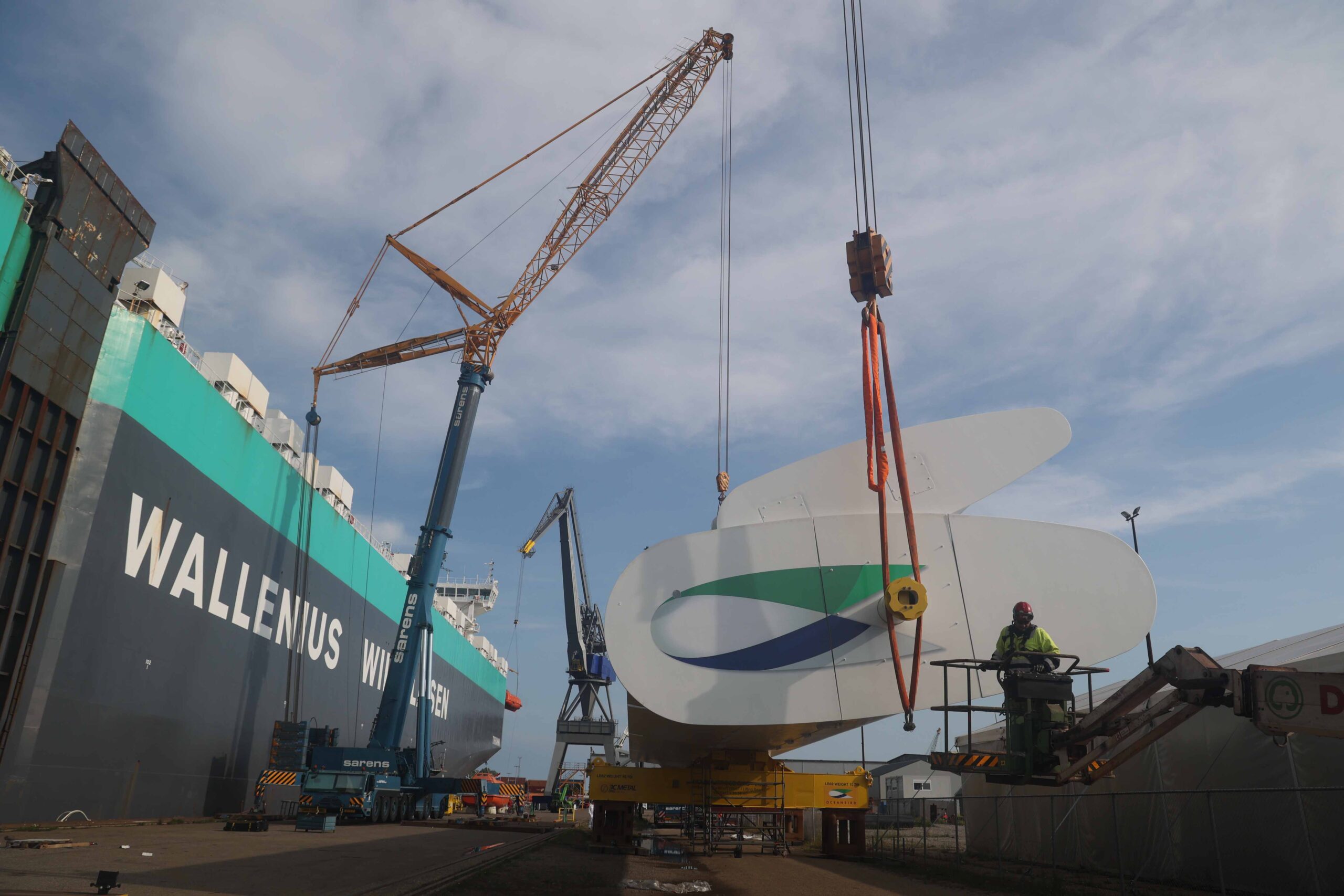
Integrating a structure of this magnitude onto an existing hull requires a highly coordinated shipyard effort. Between June 21 and June 24, 2026, crews at the Damen Shipyard in Rotterdam executed the physical retrofit. Following the installation, Tirranna departed the facility to commence her next scheduled voyage, actively equipped with the new tiltable sail. By July 1, 2026, the vessel successfully completed both its Harbour Acceptance Test and Sea Acceptance Test, validating the initial installation procedures.
Engineering the Rigid Sail Structure
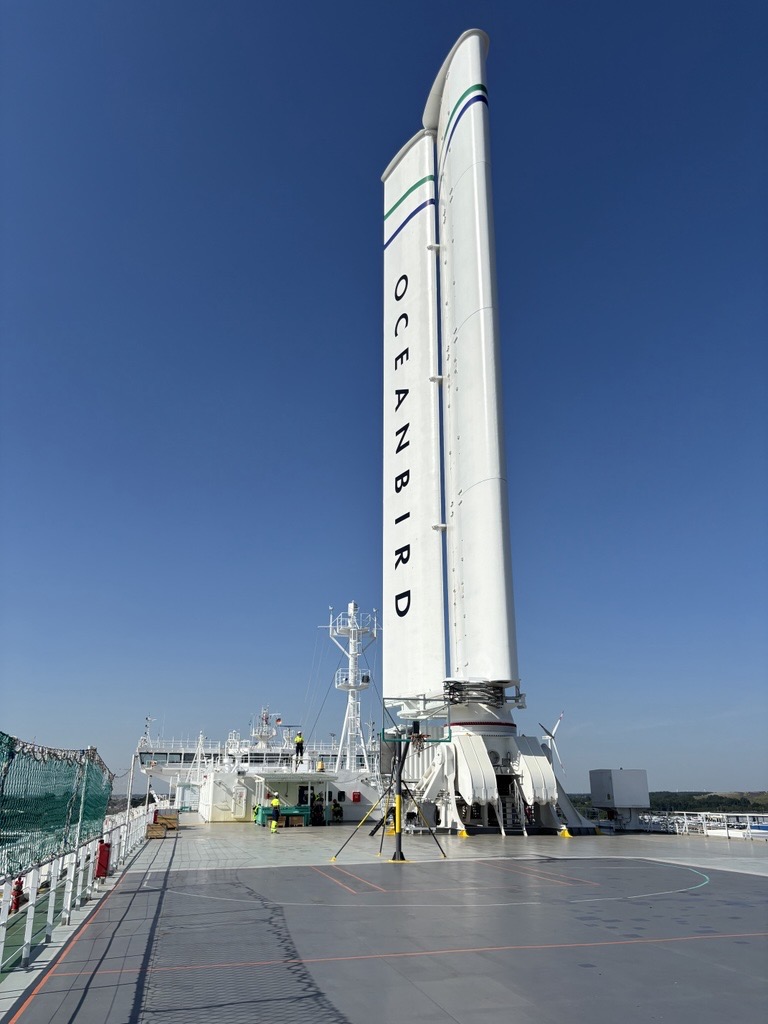
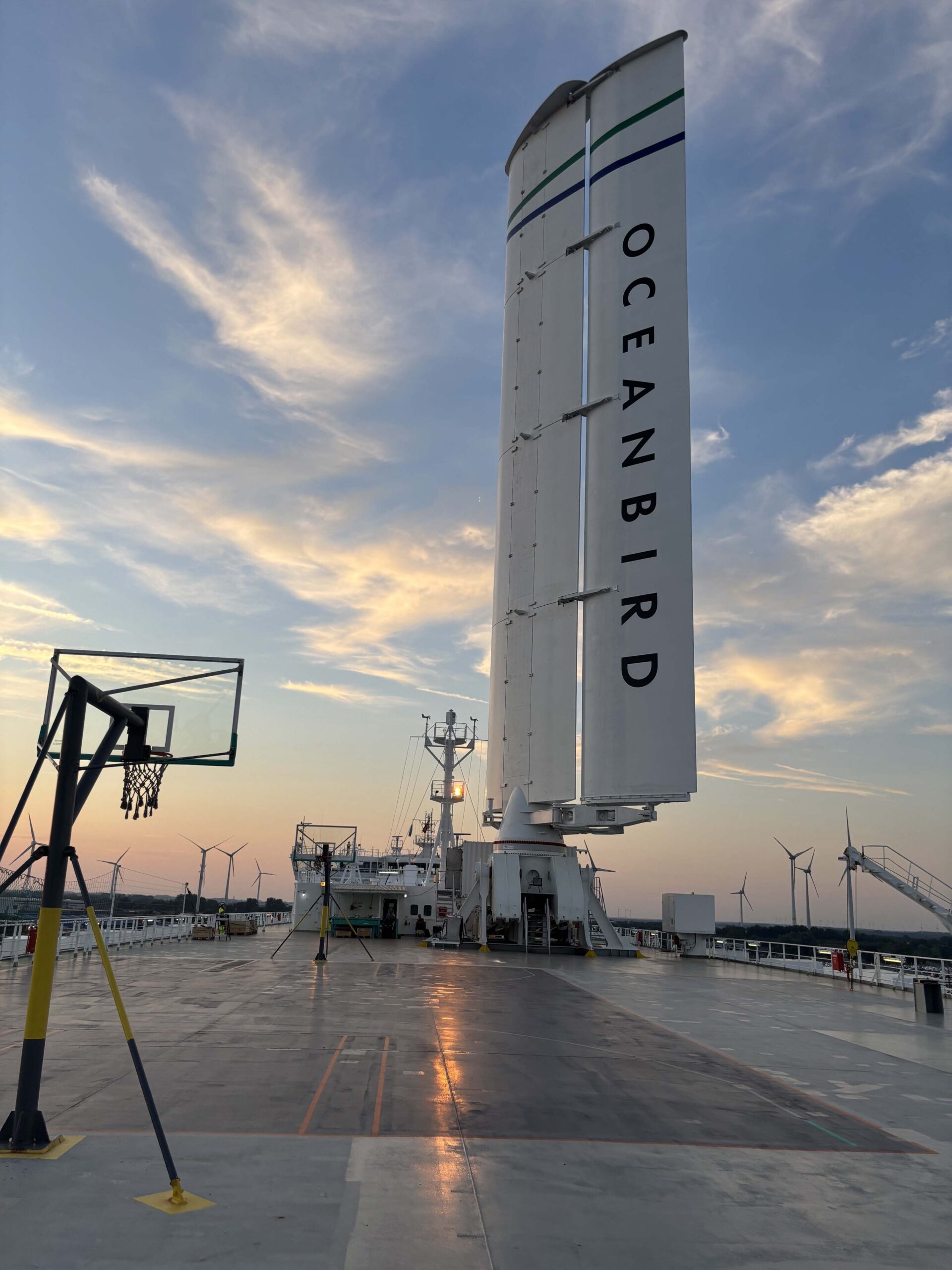
The physical dimensions of the Wing560 dictate its performance potential. Standing 46 metres tall and measuring 14 metres wide, the unit provides the immense surface area required to generate actual thrust for a heavy RoRo vessel. The system is fully tiltable, allowing the crew to manage clearance issues or severe weather events. Early projections indicate that this single-wing configuration can reduce fuel consumption and emissions by up to 10 percent on optimal routes by using air pressure to push the vessel forward.
Image from Oceanbird
Securing Design Certification
Experimental marine technology cannot enter commercial service without rigorous safety validation. In the first week of June 2026, classification society DNV granted the official design certificate for the Wing560. This certification verifies that the sail meets all applicable technical requirements and complies with strict maritime safety regulations specifically for the Tirranna. Oceanbird’sfocus on structural redundancies directly enabled the opening of the car carrier segment to this type of wind propulsion.
Live Data Collection and Future Fleet Applications
The Tirranna retrofit serves as a live testbed under the EU-funded Orcelle Horizon initiative. An Oceanbirdteam will remain aboard for a limited period to monitor real-world usage, evaluate aerodynamic efficiency, and collect operational data across global trade routes. As a joint venture between Alfa Laval and Wallenius Lines, Oceanbirdplans to leverage this data for future projects, having already scheduled two additional Wing560 installations for an undisclosed vessel in the spring of 2027.